 Just About Watches

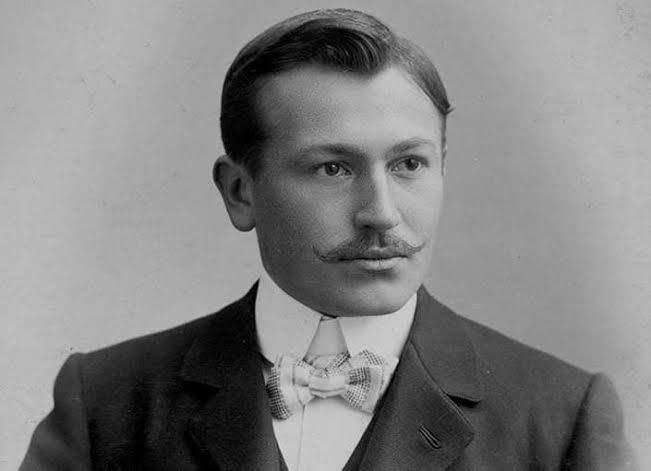
Wilsdorf’s early years were marked by audacity and insight. At twenty-four, he had already co-founded Wilsdorf & Davis, an enterprise importing Swiss movements and placing them in high-quality cases for the English market. From the outset, he was acutely aware of the importance of branding. While his competitors were content to sell watches as mere mechanical devices, Wilsdorf’s instinct was to imbue his creations with narrative and emotion. He sought perfection in precision; he championed marketing that highlighted achievement, exploration, and personal triumph. The first Rolex-branded watches appeared in 1908, with the name chosen for its brevity, ease of pronunciation across languages, and its suggestive resemblance to the word “horology.”
Wilsdorf’s commitment to precision was not empty rhetoric. In 1910, a Rolex watch became the first wristwatch to receive the Swiss Certificate of Chronometric Precision from the Official Watch Rating Centre in Bienne. Four years later, a Rolex would be awarded the Class A precision certificate from Kew Observatory in England—an unprecedented accolade, as such certification had previously been reserved solely for marine chronometers. These early milestones were foundational. They embedded a culture in Rolex that measured value not by glitter or status alone but by the cold, immutable standard of performance. Even as the brand became aspirational, its credibility was grounded in engineering.
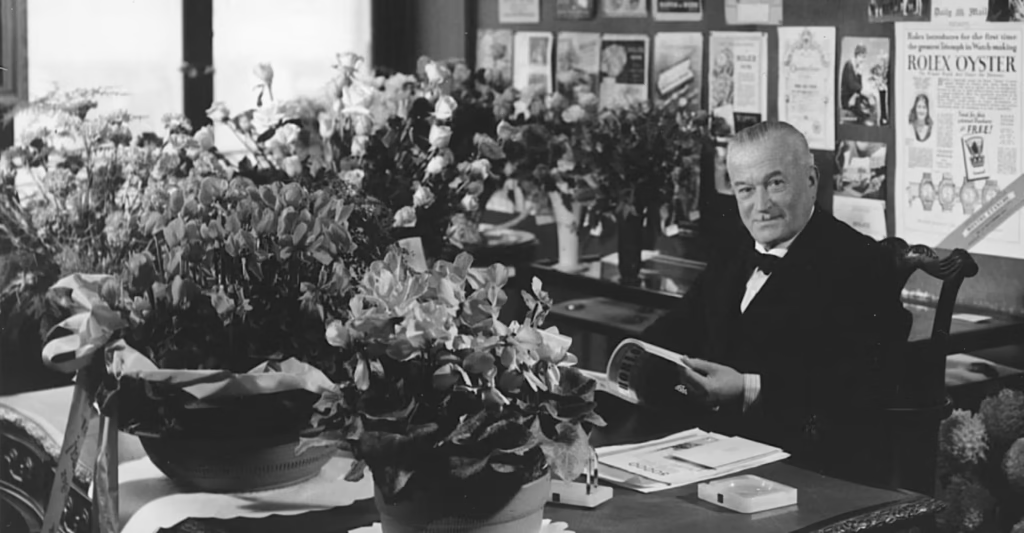
The First World War and subsequent global instability prompted Wilsdorf to relocate operations to Geneva in 1919, seeking a neutral, stable base amid Britain’s postwar economic turbulence. This move also facilitated closer collaboration with Swiss manufacturers, enabling Rolex to vertically integrate key elements of production over time, from movements to cases. Geneva provided not just geography but legitimacy; being based in Switzerland—the cradle of horological excellence—added an invisible layer of prestige that reinforced the brand’s positioning.
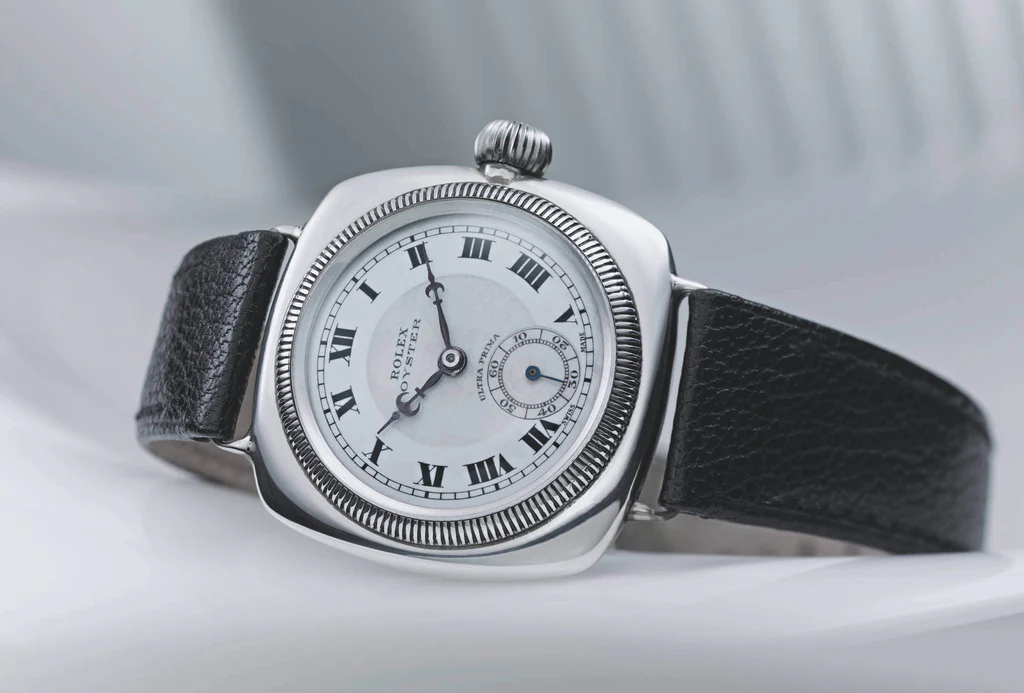
The 1920s and 1930s saw Rolex innovate in both technology and marketing. The Oyster, launched in 1926, was the world’s first waterproof wristwatch—a seemingly simple claim, but revolutionary in both engineering and consumer perception. Wilsdorf’s genius lay not just in the technical achievement but in the way it was communicated. He arranged for a young swimmer, Mercedes Gleitze, to wear an Oyster during her Channel crossing. The watch survived, and Rolex’s marketing department immortalized the event. The Oyster became more than a waterproof watch; it became a symbol of resilience, exploration, and understated triumph.
Alongside innovation came the meticulous building of distribution networks. Wilsdorf understood that a watch’s value was amplified by scarcity, controlled presentation, and selective availability. Authorised dealers were carefully curated; brand narrative was tightly managed; and advertising consistently married functionality to aspiration. Even today, Rolex maintains this DNA: its watches are globally recognised, yet the pathway to ownership remains intentionally selective.
It was during these formative decades that Wilsdorf also conceived the framework that would eventually become the Hans Wilsdorf Foundation. Personal tragedy, particularly the death of his wife Florence, led him to consider the long-term custodianship of his company. He recognized that if Rolex were ever to endure beyond his lifetime, it could not be left to public markets, fluctuating investors, or ephemeral management fads. Instead, he created a private trust to safeguard both the brand and its values. The Foundation, legally complex and deliberately opaque, would eventually own 100% of Rolex and govern its strategic trajectory. Its structure allowed Rolex to invest in research, control quality, and pursue innovation without the constraints of shareholder expectations—effectively marrying freedom with accountability.
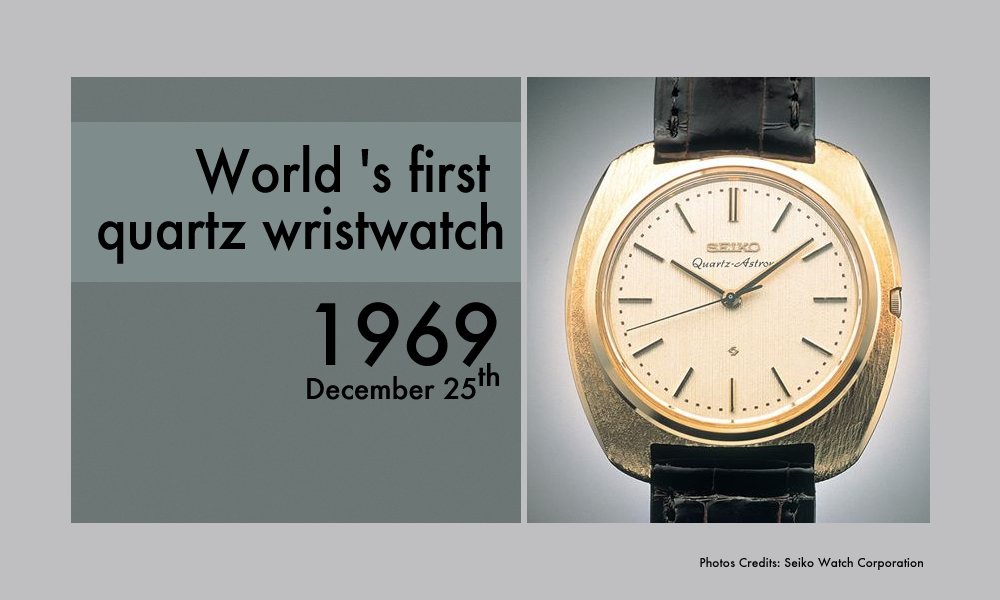
This long-term vision enabled Rolex to weather the upheavals of the 20th century. The quartz crisis of the 1970s, which decimated many Swiss watchmakers, posed a profound challenge. Competitors pivoted to quartz to survive; Rolex remained committed to mechanical excellence, confident that brand equity and craftsmanship would endure. This was not arrogance—it was the strategic freedom afforded by the Foundation’s governance. The company could ignore quarterly pressures, focus on engineering, and maintain scarcity to preserve desirability.
Rolex’s corporate structure under the Hans Wilsdorf Foundation is unusual. Unlike publicly traded entities, the Foundation allows for complete operational autonomy. Decision-making is centralized yet insulated from external market pressures. Executives report internally, and while their names may appear in trade journals, ultimate authority resides with the board appointed by the Foundation. Production, sourcing, and distribution are vertically integrated, ensuring control over every touchpoint. From proprietary steel alloys to in-house gold foundries, from high-precision movements to authorized dealer networks, Rolex’s ecosystem is a testament to strategic foresight and meticulous governance.
Financially, the model is equally remarkable. Rolex’s profits are reinvested rather than distributed to shareholders, enabling sustained investment in innovation, marketing, and controlled expansion. Estimates suggest the company consistently ranks among the highest-revenue watchmakers globally, yet it retains independence from the volatility of public markets. In effect, the Hans Wilsdorf Foundation functions as both custodian and financier, ensuring longevity, stability, and ethical alignment.
The Foundation’s influence is also cultural. By controlling narrative, distribution, and quality, it has fostered a brand aura that is virtually untouchable. Every marketing campaign, sponsorship, and high-profile placement—from professional sports to scientific exploration—is consistent with Rolex’s identity: durability, achievement, and understated prestige. This coherence is rare in global luxury, where brands often chase trends at the expense of long-term identity. Rolex, by contrast, benefits from both operational discipline and narrative discipline, a synergy engineered by the Foundation’s oversight.
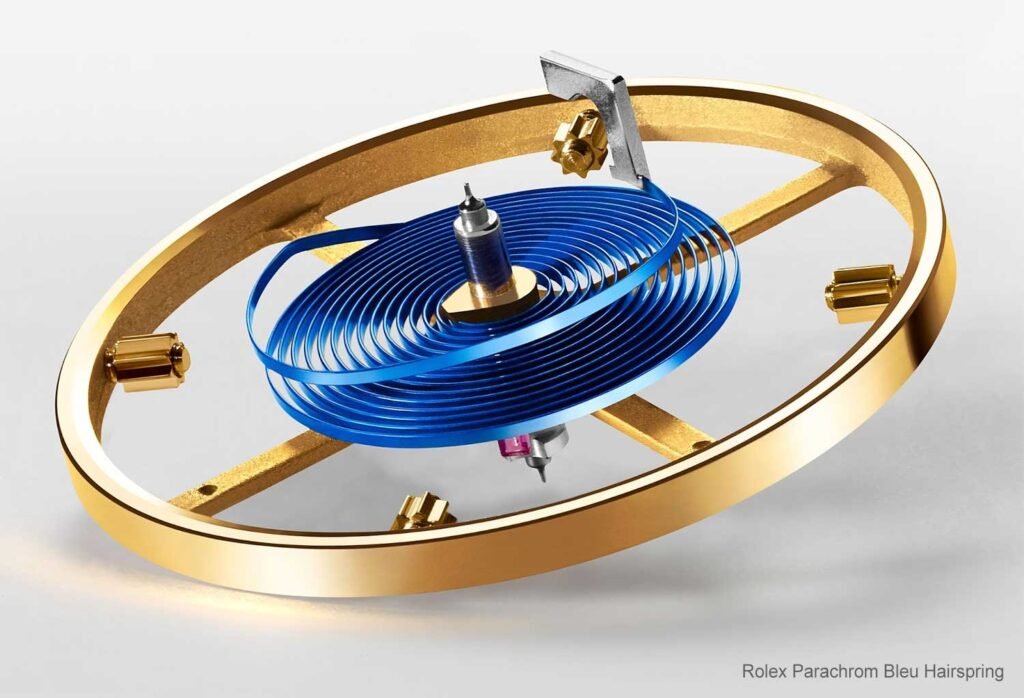
Rolex’s product philosophy mirrors its corporate philosophy. Innovations are incremental yet decisive: the Parachrom hairspring, Cerachrom bezels, and perpetual rotor are technical milestones, yet each serves a long-term vision rather than a reactionary trend. Scarcity is carefully managed; desirable models are produced in limited quantities, ensuring the perception of exclusivity while meeting demand at a sustainable pace. This tension between accessibility and rarity is a strategic art, executed with precision across decades.
Brand culture, too, is a reflection of corporate governance. Authorized dealers are carefully selected; counterfeiting and grey market distribution are tightly controlled; and marketing emphasizes narrative over hype. Even the decision to remain privately held reinforces this: Rolex can take risks without fear of immediate market backlash, invest in R&D without scrutiny, and maintain quality standards without compromise.
Historically, Rolex has also influenced broader watchmaking trends. Its pioneering in waterproofing, automatic movements, and professional tool watches has set standards that competitors follow decades later. Models such as the Submariner, Daytona, and GMT-Master have become cultural touchstones, celebrated not just for technical excellence but for their symbolic resonance. In this sense, Rolex is both a company and a cultural institution, a duality enabled by the Foundation’s stewardship.
The aftermath of World War II was a period of reconstruction, both for Europe and for the world of horology. Rolex, guided by the foresight of Hans Wilsdorf and the protective architecture of the Foundation, seized this moment to consolidate its reputation and expand its reach. While other watchmakers struggled to regain footing amid material shortages and economic uncertainty, Rolex pursued a deliberate strategy of global positioning. Geneva became more than a production hub; it became a symbol of precision and reliability. Wilsdorf’s network of authorized dealers expanded beyond Europe to North America, South America, and Asia, ensuring that Rolex was not just a Swiss brand but a global aspirational marker.
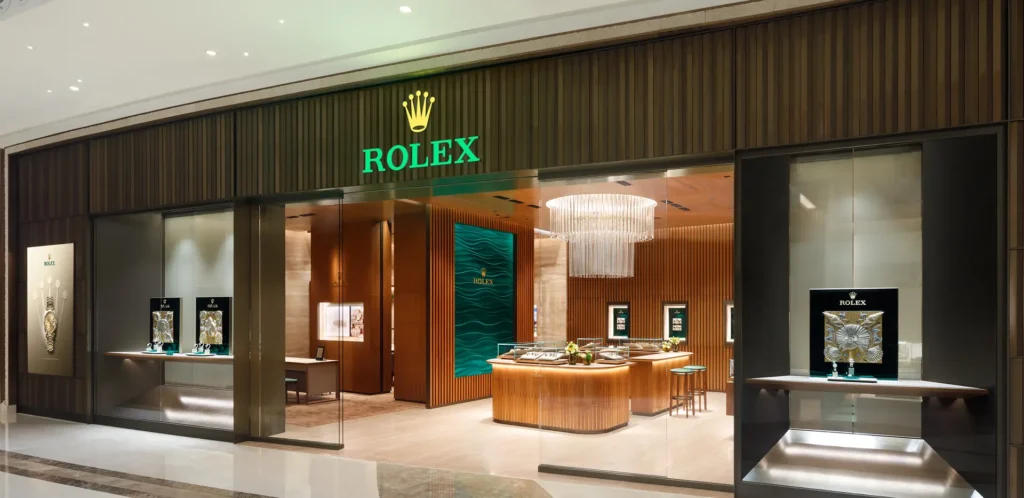
By the 1950s, the company had begun to cultivate its now-legendary “professional” line. The Submariner, launched in 1953, epitomized Rolex’s dual commitment to technical excellence and cultural narrative. Designed for divers, it boasted water resistance previously unseen in wristwatches, a luminous dial for low-light visibility, and a rugged case built to endure the extremes of underwater exploration. Yet beyond engineering, it told a story: Rolex watches were not just instruments—they were partners in adventure. Similarly, the GMT-Master, introduced in 1954 for Pan Am pilots, linked Rolex directly to global aviation, symbolizing mastery of time across continents and reinforcing the brand’s presence in the expanding era of international travel. These models were not merely commercial successes; they were strategic statements, demonstrating the brand’s ability to marry function, narrative, and aspiration in ways competitors struggled to replicate.
The Hans Wilsdorf Foundation’s influence was pivotal during this expansion. While other companies relied on external investors, risking dilution of identity and control, Rolex maintained autonomy. Investment decisions—whether to open new manufacturing facilities, enhance metallurgical capabilities, or develop proprietary movements—were guided not by quarterly earnings but by long-term vision. The Foundation allowed for patient capital deployment, meaning Rolex could perfect a technology over years, or introduce a model only when it met the highest standards of performance and design integrity. This approach explains why Rolex could, for example, take decades to develop the Parachrom hairspring or refine Cerachrom ceramic bezels without compromising commercial viability.

Rolex’s operational excellence during this period was not accidental. Vertical integration, a hallmark of the company, ensured that every component—from cases and bracelets to movements and dials—was produced under the direct oversight of the Foundation’s standards. The foundries, workshops, and laboratories were designed to eliminate dependence on third parties and maintain unparalleled quality control. This allowed Rolex to achieve consistency in mass production that few luxury competitors could match, while simultaneously preserving the illusion—and reality—of scarcity. In effect, the Foundation’s governance created a corporate ecosystem where engineering precision, brand narrative, and operational discipline reinforced each other in a seamless loop.
Rolex’s post-war product strategy was as much about cultural signaling as it was about technical innovation. Each model carried implicit narratives that resonated with social, professional, and aspirational archetypes. The Submariner, beyond its diving credentials, became synonymous with rugged independence and understated sophistication. James Bond’s first onscreen Rolex Submariner, worn by Sean Connery in Dr. No (1962), catapulted the watch from professional tool to cinematic symbol, embedding it in collective imagination. The GMT-Master, with its distinctive dual time zone functionality, became a marker of global mobility and professional acumen. Meanwhile, the Daytona, though initially slow to gain commercial traction, eventually achieved cult status as the ultimate chronograph, celebrated both for its precision and for its association with the world of motorsport.
These iconic models illustrate a critical insight: Rolex does not merely sell watches—it sells identity. Each timepiece is a vessel of narrative, simultaneously functional and symbolic. Here again, the Foundation’s strategic oversight is evident. Marketing and sponsorship were never scattershot or reactionary; each model was positioned within a coherent story arc, linking technical achievement to lifestyle aspiration. This long-term narrative management is one reason Rolex has maintained cultural relevance across generations, resisting fads while cultivating enduring desirability.
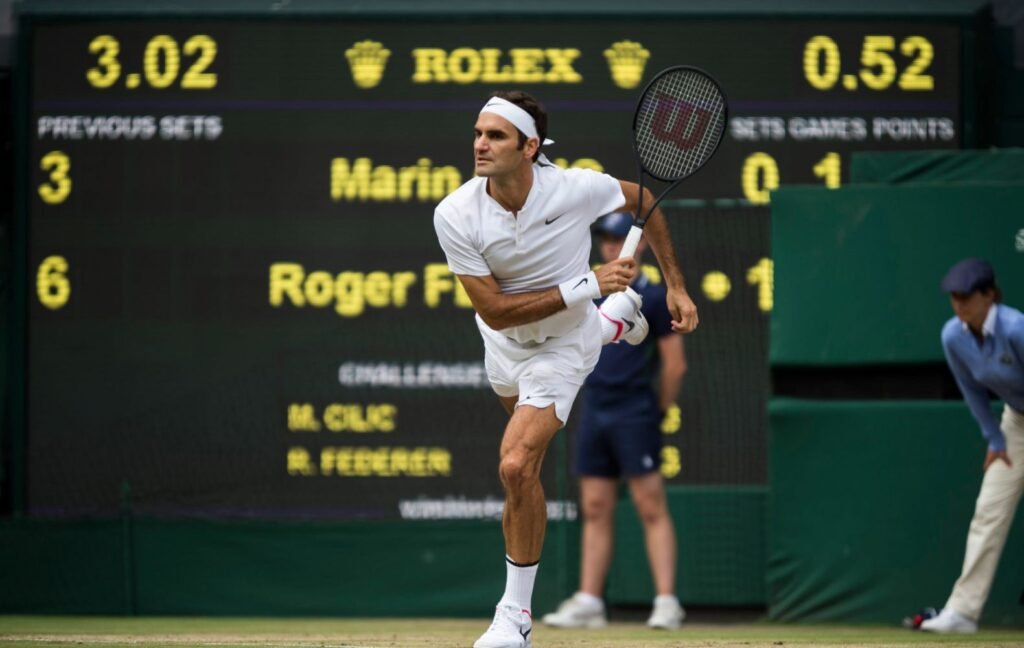
Rolex’s approach to marketing is quietly audacious. Unlike brands that saturate media with overt messaging, Rolex invests in narrative consistency and subtlety. Sponsorship of tennis Grand Slam tournaments, yachting regattas, and equestrian events underscores associations with precision, endurance, and tradition. The brand’s alignment with explorers and scientists—supporting deep-sea expeditions, high-altitude climbs, and polar research—reinforces a philosophy: Rolex is not a watch for the masses, but for those who push boundaries. This alignment is no accident; it reflects the Foundation’s long-term vision of reinforcing brand identity while maintaining operational autonomy.
Advertising itself is restrained yet unmistakable. Rolex campaigns rarely focus on features alone. Instead, they emphasize human achievement, legacy, and endurance. The implication is clear: owning a Rolex is not merely a transaction—it is participation in a continuum of excellence. In this sense, marketing becomes a form of psychological architecture, subtly shaping perceptions while reinforcing the scarcity, prestige, and desirability that underpin Rolex’s unique position in the luxury market.

From a business perspective, the Hans Wilsdorf Foundation provides Rolex with unparalleled financial flexibility. Profits are reinvested strategically rather than distributed to external shareholders, enabling sustained investment in research and manufacturing excellence. This reinvestment has facilitated initiatives that few public companies could undertake, such as developing proprietary alloys like Rolesor (combining steel and gold) or creating the exclusive 904L Oystersteel, which provides superior corrosion resistance and aesthetic consistency. Such initiatives require patience, significant capital, and the freedom to prioritize quality over immediate return—advantages that the Foundation structure affords in abundance.
Moreover, vertical integration ensures that production, supply chain, and distribution remain insulated from market volatility. Rolex can control output to maintain scarcity, mitigate counterfeiting, and regulate secondary market flows. Authorised dealers are carefully curated and trained, reinforcing the brand’s aura while ensuring that every customer interaction aligns with Rolex’s rigorous standards. This operational discipline is not incidental—it is a direct consequence of the corporate governance structure instituted by the Hans Wilsdorf Foundation.
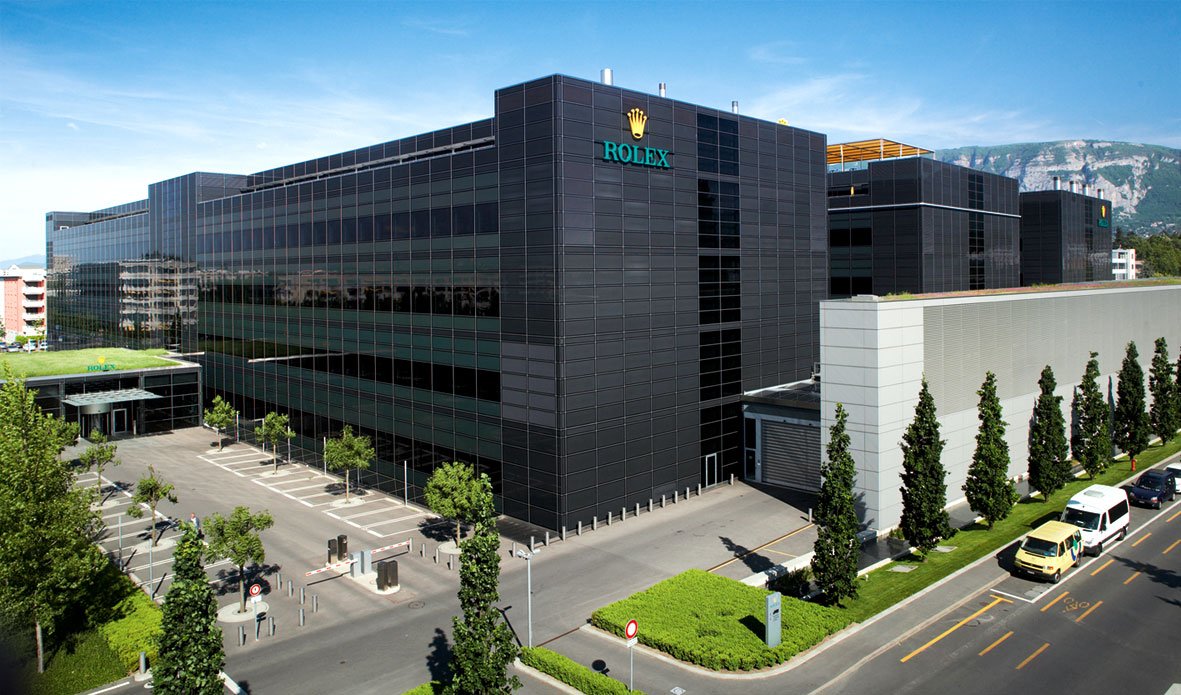
Rolex’s mastery of production is one of the most remarkable aspects of the company, and it is inseparable from the governance structure of the Hans Wilsdorf Foundation. Every element of the manufacturing process is tightly controlled, from metallurgy to machining, assembly, and finishing. Unlike many luxury competitors who outsource key components, Rolex produces nearly all of its elements in-house. The proprietary 904L steel, known as Oystersteel, is a prime example. While conventional stainless steel suffices for many watches, Rolex’s choice of this alloy reflects a deeper philosophy: longevity, resilience, and a distinctive aesthetic. The cost and difficulty of working with 904L are significant, but the Foundation’s long-term approach allows such decisions to be made based on quality rather than short-term financial return. Similarly, Rolex’s gold is refined in-house to exacting standards, ensuring both consistency and traceability. Every link of a bracelet, every bevel of a case, every polish on a dial is executed to meet criteria that the company alone defines. Vertical integration in this sense is not merely operational—it is cultural. It signals a refusal to compromise, a commitment to endurance, and a meticulous attention to detail that becomes part of the Rolex mythos.
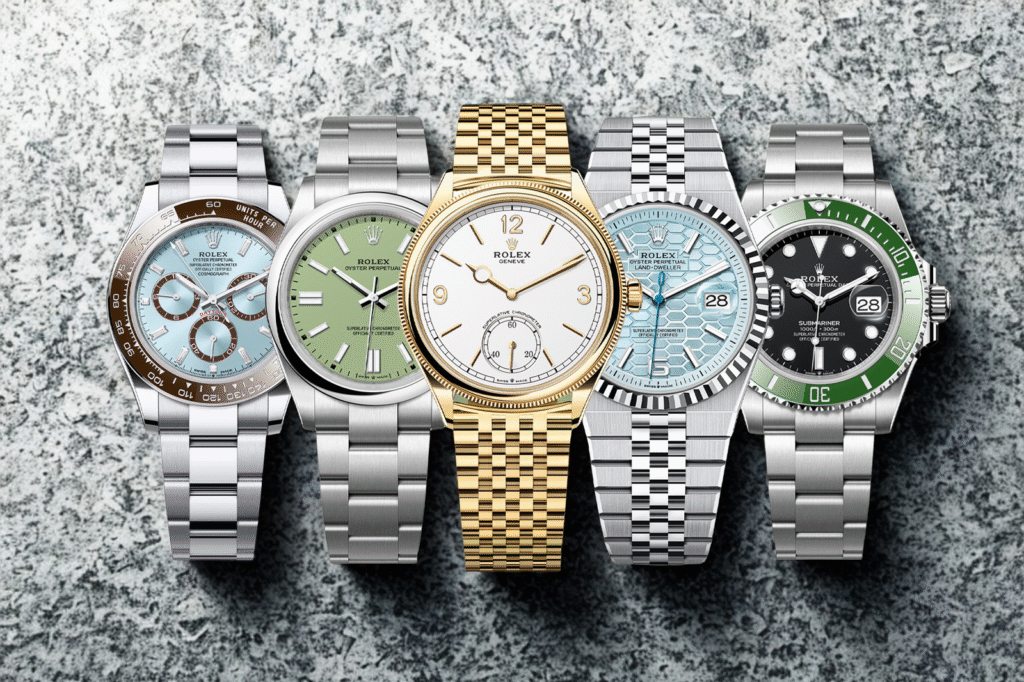
The evolution of iconic models further demonstrates the interplay between technical mastery and brand narrative. The Submariner, for instance, has undergone decades of refinement, each iteration improving water resistance, durability, and readability while retaining its recognizable identity. The GMT-Master, initially designed to help pilots navigate multiple time zones, has evolved in materials, movement precision, and bezel engineering, yet its dual-time functionality remains emblematic of global sophistication. Even the Daytona, which initially faced lukewarm reception, now represents a near-mythical standard for chronographs, prized not only for engineering excellence but for its cultural significance and scarcity. These watches are not mere instruments; they are living icons, telling stories of exploration, human achievement, and personal ambition. Each one carries decades of accumulated knowledge, innovation, and deliberate design choices that reflect the corporate philosophy instilled by the Foundation.
Rolex’s global presence is another extension of the Foundation’s influence. Carefully chosen distribution channels, highly selective authorized dealers, and controlled production numbers all contribute to a perception of scarcity that amplifies desire. Unlike many competitors who chase market share aggressively, Rolex maintains deliberate restraint, allowing demand to outpace supply in most models. This creates an aura of exclusivity that is both psychological and practical. Consumers perceive Rolex not only as superior in engineering but as something rare, a possession that signals accomplishment without overt ostentation. The Foundation’s oversight ensures that this approach is consistent, sustainable, and untainted by short-term profit motives.
Financial strategy within this structure further strengthens the brand’s independence. By reinvesting profits rather than paying dividends, Rolex ensures a perpetual cycle of innovation, quality enhancement, and brand stewardship. This has enabled initiatives such as advanced research into Parachrom hairsprings, anti-magnetic alloys, and the precision engineering of perpetual movements. These are investments with long horizons, feasible only under a governance system insulated from quarterly reporting pressures. In essence, the Hans Wilsdorf Foundation provides both the vision and the patience required to execute projects that would be untenable under conventional corporate structures.
Beyond production and finance, the Foundation has allowed Rolex to craft a global identity anchored in achievement, endurance, and subtle prestige. Marketing campaigns are understated yet effective, associating Rolex with explorers, athletes, scientists, and cultural figures who embody mastery in their fields. Sponsorships, whether of tennis Grand Slams, yacht races, or polar expeditions, reinforce a consistent narrative: Rolex is not a watch for everyone; it is a companion for those who pursue excellence. Every advertisement, every partnership, every carefully documented record of achievement communicates the brand’s ethos without overtly declaring it, a strategy made possible by the long-term stewardship of the Foundation.
In recent decades, the Foundation’s structure has enabled Rolex to weather economic cycles with remarkable resilience. The company remained largely insulated during financial crises that disrupted competitors, relying on its strong balance sheet, diversified global presence, and the reputational capital built over decades. The deliberate pacing of production, careful model evolution, and controlled marketing have allowed Rolex to sustain desirability even in periods of broader market volatility. Its watches have not only retained value—they have become investment-grade assets, a testament to the interplay between engineering excellence, scarcity management, and brand storytelling.
Philanthropy is another layer of the Foundation’s influence, often overlooked but integral to the company’s public perception. While Rolex is famously private about its financials and operations, it has long supported scientific research, exploration, and cultural initiatives. By channeling funds into projects that align with its brand narrative, the Foundation amplifies the perception of Rolex as a company committed to enduring achievement and human progress. This charitable focus is consistent with Wilsdorf’s original vision: a company insulated from short-term market pressures, free to invest in projects that extend beyond profit and into legacy.
Yet the Foundation also enforces a strict discipline that has occasionally sparked criticism. Transparency is limited, pricing strategies are opaque, and access to certain models is controlled. Grey markets and resale premiums have become points of discussion among collectors, sometimes interpreted as artificial scarcity. But within the context of the Foundation’s long-term strategy, these elements are deliberate. They preserve brand integrity, maintain demand, and reinforce the exclusivity that is central to Rolex’s identity. In this light, what might seem like scarcity or inaccessibility is part of a carefully managed ecosystem that balances operational excellence, market psychology, and cultural resonance.
As Rolex enters the 21st century, the Hans Wilsdorf Foundation continues to shape its trajectory. Innovation remains steady but incremental, avoiding the volatility of trend-chasing. Marketing retains its understated elegance, aligning with explorers, athletes, and cultural leaders to reinforce the brand narrative. Production continues to be vertically integrated, ensuring quality and consistency. Globally, Rolex maintains its aura of rarity while extending its presence in key markets, demonstrating a mastery of strategic balance that few companies achieve. The Foundation ensures that every decision—be it technological, operational, or cultural—is evaluated against the enduring principles established by Hans Wilsdorf himself: precision, reliability, discretion, and timeless appeal.
Ultimately, the Hans Wilsdorf Foundation and Rolex’s corporate structure are inseparable from the brand’s identity. They create a system where long-term vision overrides short-term gain, where operational discipline aligns with cultural narrative, and where every watch carries not only mechanical precision but the weight of a carefully curated legacy. Rolex is therefore not just a manufacturer of timepieces; it is a living testament to the possibilities of private governance, strategic patience, and relentless commitment to both craft and culture. The Foundation is the silent architect behind this achievement, ensuring that the watches we admire are more than instruments—they are enduring symbols of human aspiration, realized through corporate design and operational mastery.
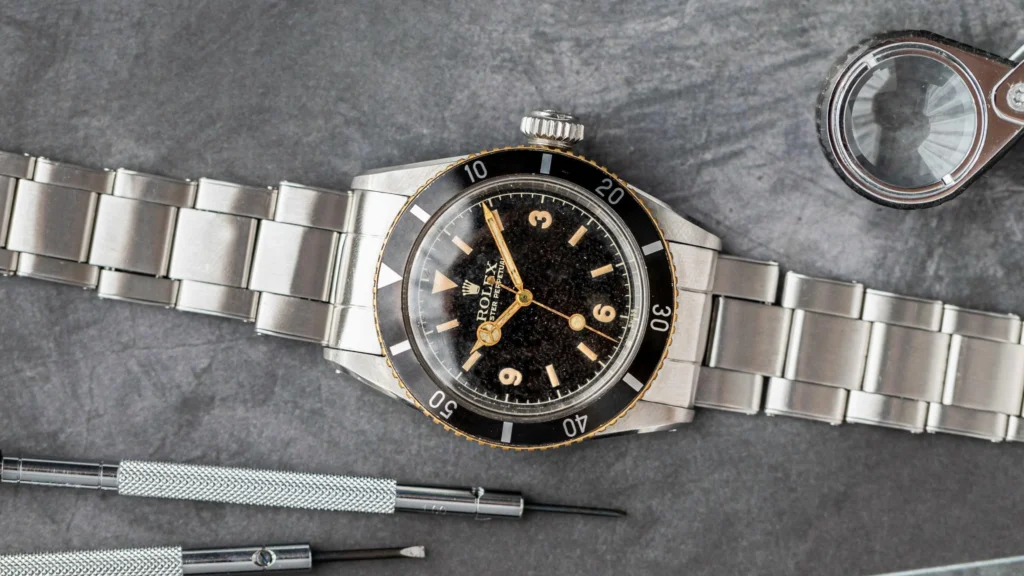
Rolex’s product evolution over the decades is inseparable from its corporate philosophy, and the Hans Wilsdorf Foundation’s influence is evident in the way each watch is conceived, refined, and released. The Submariner, launched in 1953, provides a compelling case study. Initially created as a professional diver’s tool, its design emphasised robustness, water resistance, and legibility under challenging conditions. The original reference 6204 offered water resistance to 100 metres and a rotating bezel for timing dives—a combination unprecedented at the time. However, Rolex did not stop there. The company invested years of research and iterative design improvements, enhancing depth ratings, refining the Oyster case, and introducing luminescent materials like tritium to optimise visibility. Each technical enhancement was deliberate, executed under the Foundation’s oversight, and integrated without compromising the model’s identity. By the 1960s, the Submariner had achieved not only functional superiority but also cultural iconography, cemented in part by its appearance on the wrists of adventurers and in films, most famously James Bond.
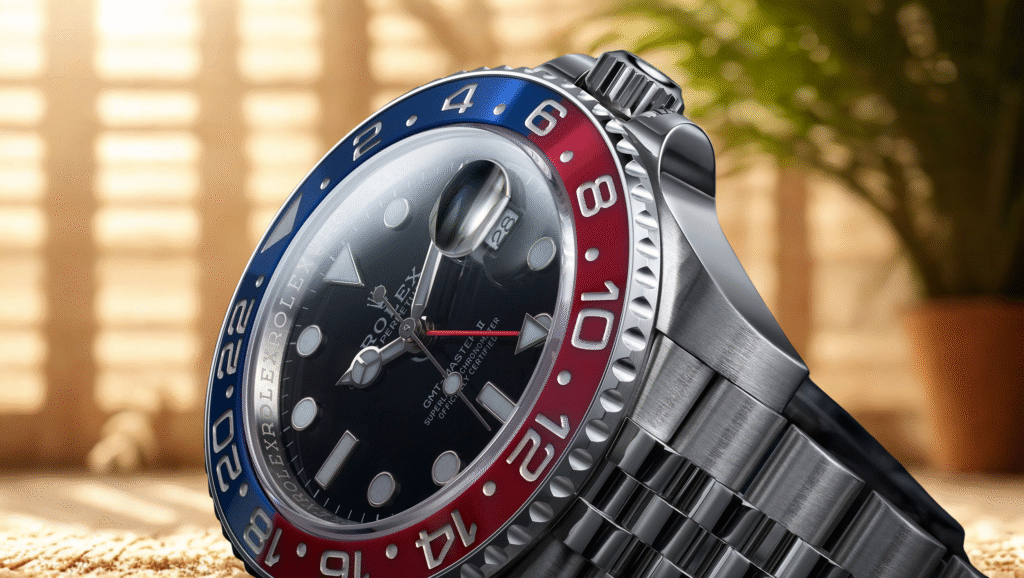
Similarly, the GMT-Master, created in 1954 for Pan American Airways pilots, illustrates Rolex’s strategy of aligning engineering solutions with lifestyle narratives. The dual time zone function addressed a practical problem for long-haul pilots, yet the watch also projected sophistication and global awareness. The “Pepsi” bezel—red and blue—was more than decorative; it became instantly recognisable, embedding the model in the cultural imagination. Over successive generations, Rolex refined the GMT-Master with enhanced calibres, sapphire crystals, and modern materials, such as Cerachrom bezels, yet the essence of the watch remained intact. This balance of continuity and innovation exemplifies how the Foundation’s structure enables Rolex to innovate responsibly, preserving heritage while embracing technological advances.
The Daytona, another pillar of Rolex’s model lineup, tells a story of patience and market psychology. Introduced in 1963, the chronograph initially struggled to gain traction. Its association with motor racing and the Daytona International Speedway gave it a functional and aspirational narrative, yet sales were modest for years. Rolex did not respond with mass-market discounting or aggressive marketing; instead, it continued refining the movement, improving precision and reliability, and gradually cultivating desirability. The decision to eventually pair the Daytona with celebrity endorsements and high-profile auction placements in the 1980s and 1990s demonstrates strategic patience—a hallmark of the Foundation’s governance. Today, the Daytona represents both mechanical excellence and psychological scarcity, commanding premiums that reinforce the brand’s aura without diluting its integrity.
Rolex’s technological innovations are similarly anchored in the Foundation’s long-term vision. The development of the Perpetual movement, first introduced in 1931, revolutionized automatic winding by creating a fully self-winding mechanism that could reliably power a watch with minimal user intervention. Decades later, Rolex would continue to refine mechanical engineering with innovations such as the Parachrom hairspring, a silicon-based component resistant to temperature variation and magnetism, enhancing accuracy under diverse conditions. Anti-magnetic movements, precision chronometer certifications, and proprietary alloys all reflect a consistent philosophy: Rolex invests in engineering not to chase trends, but to achieve enduring excellence. Each technical decision is filtered through a lens of quality and longevity, a process facilitated by the Foundation’s insulation from shareholder pressure.
Global expansion and market presence are intertwined with this philosophy. Rolex’s network of authorized dealers is tightly curated, ensuring that brand presentation and customer experience remain consistent. Each retailer is trained to convey Rolex’s story, emphasizing durability, heritage, and achievement rather than mere adornment. The Foundation’s governance guarantees that market decisions—whether geographic expansion, product allocation, or pricing—serve the brand’s long-term positioning rather than immediate revenue goals. This disciplined approach maintains desirability, controls distribution, and supports a secondary market that amplifies perceived scarcity, all without overt manipulation.
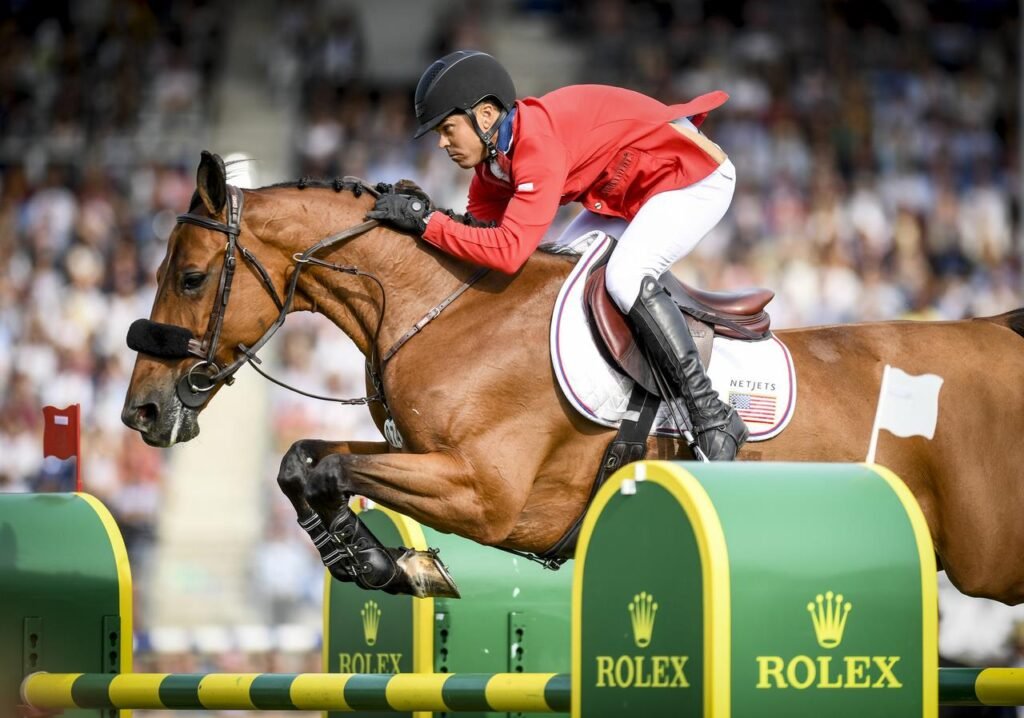
The interplay between cultural resonance and corporate strategy is particularly evident in Rolex’s sponsorships and partnerships. By associating with tennis, yachting, exploration, and scientific research, the brand embeds itself in narratives of human achievement and precision. These associations are not incidental; they are carefully curated to reinforce the brand’s identity while aligning with Wilsdorf’s vision of integrity, performance, and timeless appeal. Rolex sponsorships serve a dual function: they extend the brand into public consciousness while simultaneously creating an aspirational context for each timepiece. The perception that a Rolex is worn by those who achieve, endure, and explore reinforces the psychological appeal, linking ownership to status, competence, and aspiration.
Financially, the Foundation continues to provide Rolex with unprecedented autonomy. Profits are reinvested into research, production, and cultural initiatives, ensuring that short-term market pressures never compromise long-term strategy. This capital reinvestment enables Rolex to undertake projects that would be untenable under conventional corporate governance, from in-house metallurgical research to innovations in movement precision. Operational excellence, controlled scarcity, and narrative coherence are therefore not incidental outcomes—they are engineered features of a system designed to prioritize quality, heritage, and desirability over immediate profitability.
Critically, the Foundation also serves as a stabilizing force for brand leadership and corporate culture. Leadership transitions, succession planning, and strategic decision-making are insulated from external pressures, enabling a continuity of vision that is rare in the luxury sector. The result is a brand identity that remains consistent across generations, with a clear emphasis on precision, reliability, and understated prestige. Rolex does not chase trends or fads; it shapes its own trajectory, guided by principles established almost a century ago.
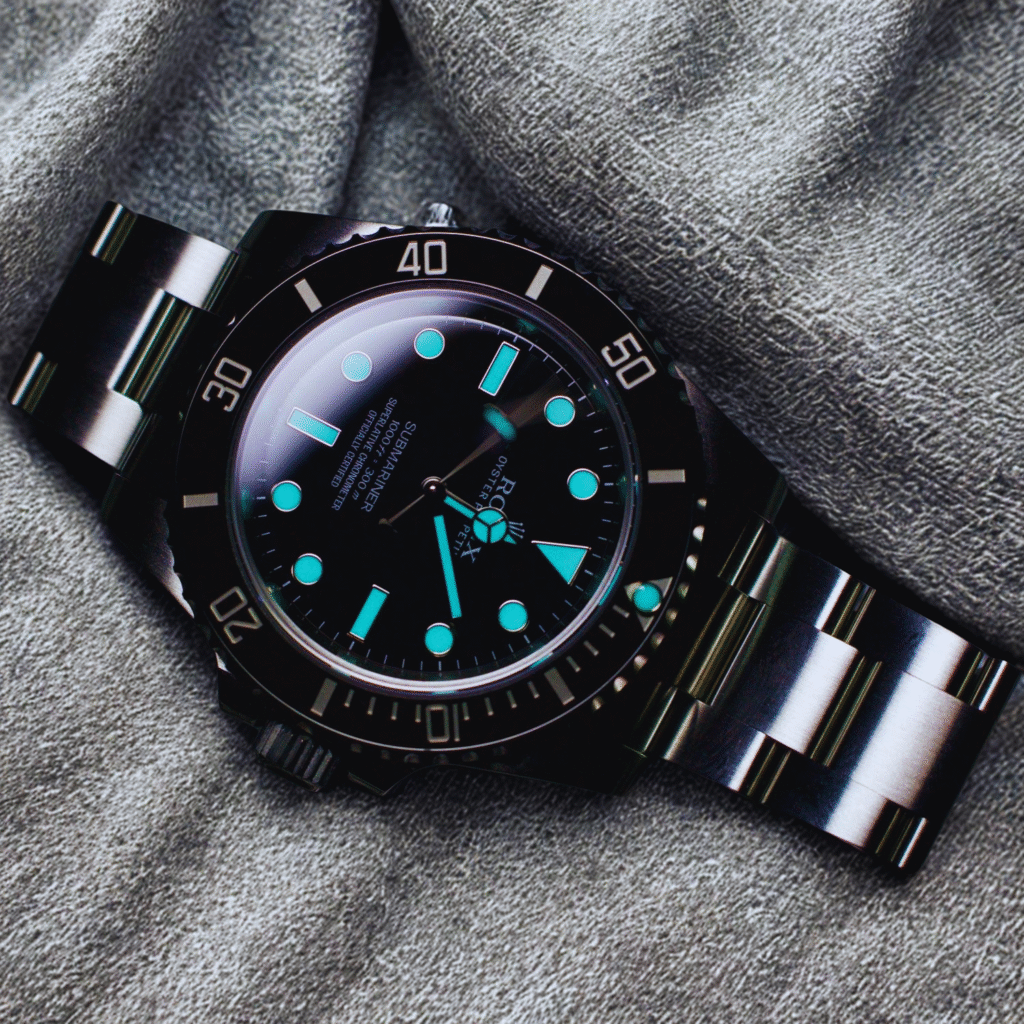
Even in the 21st century, this structure proves its worth. As markets globalize and consumer expectations shift, Rolex maintains operational discipline, cultural coherence, and engineering excellence. Innovations continue, from Cerachrom bezels to Chromalight luminescence, but each is introduced with careful attention to heritage, aesthetic continuity, and functional improvement. Marketing remains restrained, emphasizing achievement and human endeavour rather than overt salesmanship. Scarcity is managed, desirability sustained, and narrative consistency preserved. The Hans Wilsdorf Foundation remains the invisible architect, ensuring that every watch embodies the company’s enduring philosophy.
In many ways, Rolex exemplifies a rare convergence of craft, corporate governance, and cultural storytelling. The watches themselves are remarkable, but the system that produces them—vertically integrated, financially autonomous, and guided by the Foundation—is equally extraordinary. Each timepiece carries not only mechanical precision but the weight of nearly a century of deliberate strategy, patient innovation, and brand stewardship. Rolex is, therefore, more than a manufacturer of watches; it is a living case study in how long-term vision, disciplined execution, and cultural narrative can create enduring value, both in material and symbolic terms.
Today, the Rolex of the modern era is defined not only by its engineering mastery or cultural prestige but by the subtle, deliberate architecture of its governance. The Hans Wilsdorf Foundation remains at the apex, a silent yet formidable steward that shapes strategy, ensures continuity, and protects the brand from the fluctuations of short-term market pressures. Executives operate within a framework designed to align operational decisions with long-term vision. They manage production schedules, research and development, distribution, and marketing, but always under the guiding principle that Rolex’s identity—precision, durability, subtlety, and heritage—must never be compromised. Decision-making is therefore unusually insulated: it is not dictated by shareholder activism, quarterly earnings reports, or transient consumer trends. Instead, the company pursues a disciplined trajectory, balancing innovation with consistency, growth with exclusivity, and ambition with restraint.
This structure produces executives who are guardians as much as managers. Their remit is to protect the brand’s integrity, uphold the rigorous standards set by decades of internal excellence, and steward the company’s legacy into a complex, globalised market. From material science and in-house production to marketing partnerships and philanthropic initiatives, their influence is exercised quietly, deliberately, and in a manner that ensures every Rolex watch that reaches a wrist carries with it the weight of an enduring philosophy. The chain of command is less about hierarchy and more about alignment with a long-term vision that transcends individuals—a vision that Hans Wilsdorf himself set in motion nearly a century ago.
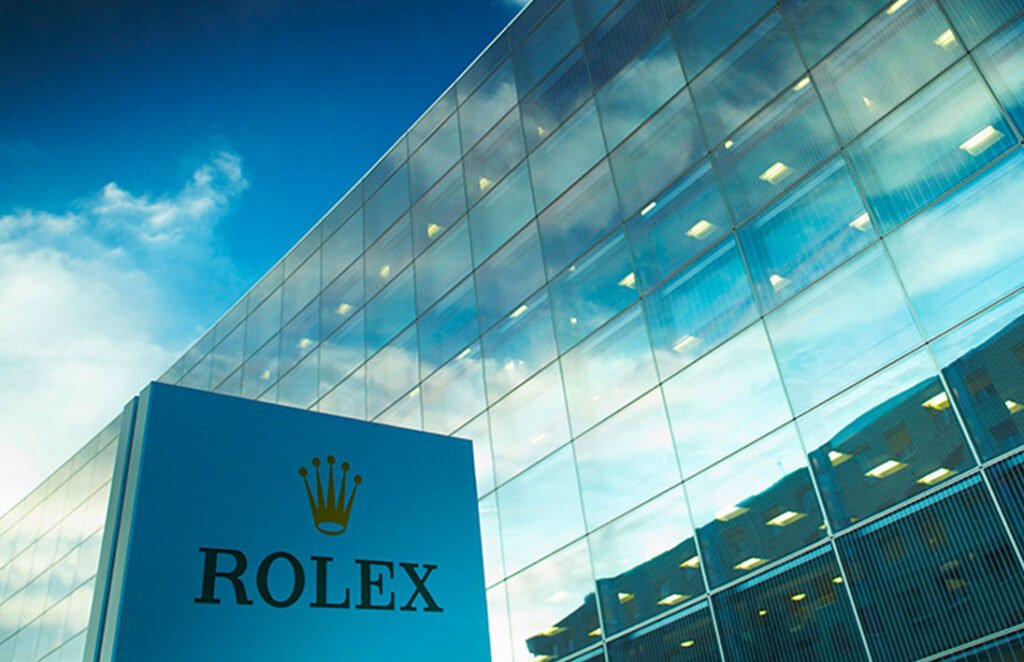
Rolex’s modern governance, therefore, is an invisible engine. It is why the company remains resilient across economic cycles, why its designs evolve without betraying heritage, and why it continues to capture both imagination and desire worldwide. The Hans Wilsdorf Foundation allows executives the freedom to innovate and manage with autonomy, but within a structure that keeps every decision consistent with the brand’s DNA. It is this rare combination of freedom and discipline, of stewardship and strategy, that underpins Rolex’s ongoing success.
As remarkable as this structure is, there are many facets still to explore: the Foundation’s influence on model development, the psychology of scarcity, Rolex’s secondary market dynamics, and its subtle interplay with collectors’ culture. These areas offer rich insight into how governance, engineering, and perception intersect to sustain a brand that is both profoundly traditional and endlessly aspirational. In future articles, we will dig deeper into these subjects, revealing the mechanisms that allow Rolex not just to endure, but to define what a luxury watch can be in the modern world.