 Just About Watches

For me, however, the case for a one-watch life begins with versatility. But let’s go back to where I sit. My first choice is the Casio G-Shock DW-5600E, a digital tool that can take a hammering, plunge into water, and be forgotten on the wrist while still quietly logging the seconds with near-perfect accuracy.
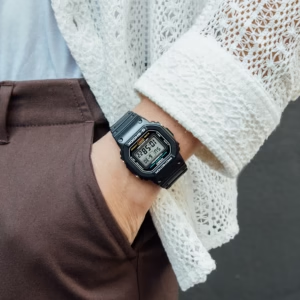
If a single watch were required to survive the harshest conditions, it would be difficult to argue against a G-Shock. They are virtually indestructible, accessible, and accurate to a degree that mechanical pieces can only dream of. It is telling that special forces, adventurers, and everyday workers alike have adopted them. A single G-Shock could, in truth, cater for most conditions one might ever find themselves in. The same can be said for the humble Casio F91W, retailing for under fifty dollars, famously worn by billionaires like Bill Gates and Mark Zuckerberg, who could buy entire watch companies outright but still gravitate towards something so simple. It raises a question about value and status: when the most financially powerful among us choose a basic Casio, does it prove that one watch really is enough? Or does it show that collecting is less about need and more about want, more about the emotional weight of ownership than the practical reality of timekeeping?
From there, the argument stretches into luxury territory. YouTuber Harrison from the Chisholm Hunter channel (Above) made a compelling case in his recent video exploring what a single-watch collection might look like. His poll results, though based on a small sample of votes, reflect some of the community’s instincts. The Rolex Submariner No Date (ref. 124060) came in third place, and it is easy to understand
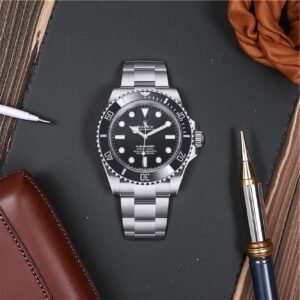
The Submariner has been the standard for divers for decades, combining a tough build, timeless style, and the kind of instant recognition that only Rolex can provide. However, when we consider value, it’s hard to ignore that alternatives like the KG&S Submersible Storm—drawing inspiration from that Rolex DNA but developing its own aesthetic—can offer similar presence and performance at a fraction of the £8,000 price. The psychology of desire plays a significant role here: does the Submariner genuinely perform better, or does it simply embody a dream that marketing and heritage have successfully embedded into our minds?
Second place in Harrison’s poll went to the Omega Seamaster Diver 300M (ref. 210.30.42.20.01.001), and this feels harder to argue with. It is a watch that blends professional specifications with everyday wearability, backed by Omega’s impressive Co-Axial Master Chronometer movement, which shrugs off magnetism and offers enviable accuracy. The Seamaster offers history, Bond association, and a serious dive pedigree. If someone wanted a single watch that could handle everything from boardroom to beach, the Seamaster would be a leading candidate. Yet even then, the question lingers—does it fully eclipse the field?
Harrison’s winning pick, surprisingly to me, was the Rolex Explorer II (ref. 226570). Its toughness and dual-time GMT hand certainly provide utility, and for some, it may well be the perfect companion for adventure. But I can’t fully subscribe to this view. While undoubtedly robust and capable, it still carries an air of elitism, a piece that only a small portion of enthusiasts can realistically reach.
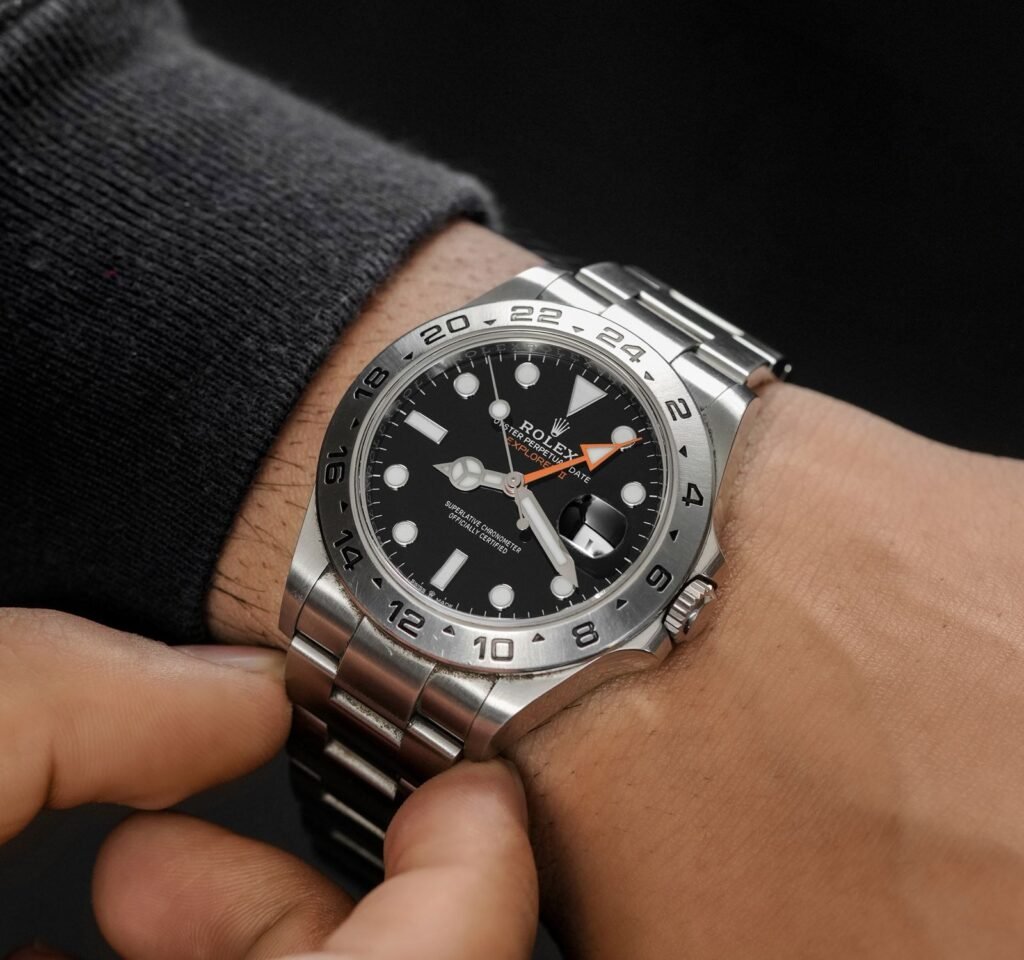
To position it as the “ultimate” one-watch solution feels somewhat narrow, particularly when there are so many watches outside the Rolex bubble that can offer just as much, if not more, in terms of practicality and individuality. Enthusiasts would do well to widen their horizons. After all, the poll had just twenty-two participants, a number far too small to reflect the wider community’s diversity of taste and circumstance.
If I were to put forward alternatives, I would begin with the Tudor Black Bay 58 (ref. M79030N). It offers vintage-inspired charm with modern execution, backed by Tudor’s in-house movement, and it manages to be both versatile and approachable compared to its Rolex cousins. The argument for it as a single watch is strong: it looks equally at home on a NATO strap, a leather band, or a bracelet, and its 39mm case sits comfortably on almost any wrist. Yet here again, one could counter with the KG&S Submersible Storm, which brings similar proportions, a rugged design language, and the symbolic weight of being tied to a purpose greater than itself—raising awareness and funds for cancer research. In terms of storytelling and meaning, it offers something no mass-produced Swiss diver can replicate.
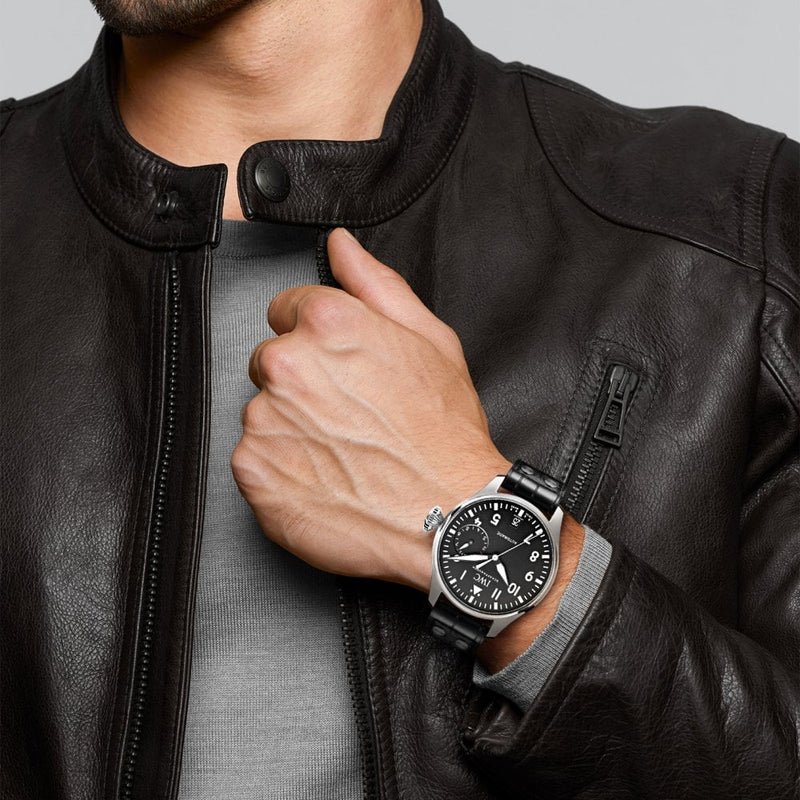
The IWC Big Pilot (ref. IW501001) also deserves a mention. While its 46mm case may be too large for many wrists, it represents the kind of statement piece that could, for some enthusiasts, be the watch to end all watches. It is iconic, legible, historically rooted, and fitted with a movement that delivers a week-long power reserve.
As a single watch, it is less versatile than others, but it offers a distinctive character that no collection could ignore. Similarly, a TAG Heuer Aquaracer (ref. WBP201A.BA0632) could be a candidate, offering Swiss build quality, 300m water resistance, and an accessible price point compared to the Rolex and Omega titans.
Adding my own seven models to widen the conversation, I would point first to the Grand Seiko SBGA211, better known as the “Snowflake.” Its Spring Drive movement combines quartz accuracy with the mechanical soul of traditional horology, and its textured dial makes it a piece of art on the wrist. Next, the Zenith Chronomaster Sport (ref. 03.3100.3600/21.M3100) deserves mention. With its high-beat El Primero movement and integrated bracelet, it seamlessly blends sportiness with chronograph heritage, allowing it to cover multiple roles in one watch. For those who lean towards elegance, the Jaeger-LeCoultre Reverso Classic Large Duo-face (ref. Q3848422) offers timeless Art Deco style and a second timezone, making it a practical dress piece that doubles as a traveller’s companion.
On the more tool-oriented side, the Sinn U50 (ref. 1050.010) provides submarine-steel toughness and 500m water resistance in a wearable 41mm case, making it one of the most resilient and practical divers available.
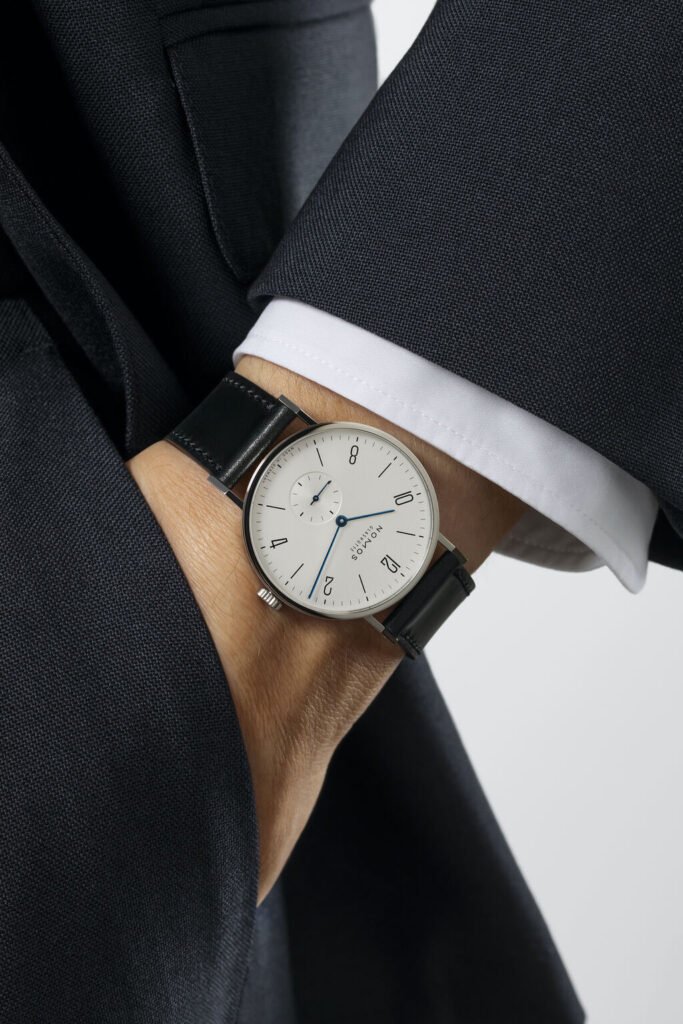
The Nomos Tangente 38 (ref. 164) could be another ideal one-watch candidate, offering Bauhaus design purity with enough versatility to handle casual and formal wear. For those drawn to rugged outdoor use, the Garmin Fenix 7 offers smartwatch functionality that surpasses traditional mechanical devices in terms of health, navigation, and fitness, making it a modern contender for the “do-everything” role. Finally, for the enthusiast who wants genuine luxury in one piece, the Patek Philippe Aquanaut (ref. 5167A) combines brand prestige, casual wearability, and high-end finishing in a package that could realistically serve as a one-watch grail.r the “do-everything” role. Finally, for the enthusiast who wants genuine luxury in one piece, the Patek Philippe Aquanaut (ref. 5167A) combines brand prestige, casual wearability, and high-end finishing in a package that could realistically serve as a one-watch grail.
What ties all these suggestions together is not their specs or their price tags but the idea of choice and satisfaction. Harrison raised the issue of movements—do they really matter once we pass a certain price range? To an extent, yes, they do, but only to a minority who genuinely appreciate the engineering differences. For the majority, it becomes less about precision (since even the cheapest quartz can outperform the best mechanicals in accuracy) and more about what the watch represents. It is about the psychology of desire, the feeling a watch gives us, and the satisfaction of knowing that the piece on our wrist reflects something of who we are. Whether that comes in the form of a £20 Casio F91W, a KG&S Submersible Storm, or a Rolex Submariner, the essence remains the same.
A single watch could indeed be enough. The G-Shock could survive almost anything, the Casio could prove that simplicity trumps all, the Seamaster could balance versatility with heritage, and countless others could each fulfil the role in their own unique way. But will it ever truly be enough for an enthusiast? That depends entirely on whether we view watches as tools or as passions, as necessities or as indulgences. In reality, most enthusiasts will continue to collect, to compare, to hunt, and to swap, because watches are not only about telling the time—they are about telling our story. Still, it remains a compelling thought experiment: if you had to choose just one, which would it be? That answer might reveal more about who you are than any number of watches in a display case ever could.
Young Pretenders?

The temptation is always to default to the established greats, those names that dominate every boutique window and auction catalogue. Rolex, Omega, Patek Philippe, Audemars Piguet, Breitling—these are the brands that have been etched into the collective consciousness, so much so that even non-enthusiasts could point them out in a line-up. But this tendency to think only in terms of “the known” overlooks a crucial reality: some of the most compelling candidates for a one-watch collection come from places that sit well outside of that spotlight. They are not pretenders or poor substitutes, but genuine alternatives with their own DNA, capable of satisfying the wrist for a lifetime. And that’s where the conversation becomes truly interesting.
Consider first the Submersible Storm. At a glance, it nods to the same design language that made the Submariner an icon—clean lines, tool-watch robustness, and the sort of legibility that divers demand. But spend more than a moment with it and you see the differences stack up quickly. The Storm is not trying to be a carbon copy; it embraces over a dozen distinct design departures, giving it a character that stands firmly on its own. The casework feels purposeful, the dial layout is carefully considered, and the proportions make it a watch you can actually live with day in and day out. It is Submariner-inspired, yes, but also refreshingly independent, an example of how you don’t need a crown on the dial to achieve presence on the wrist. For someone seeking a one-watch solution, the Storm shows that you can step outside the gravitational pull of household names and still land on something versatile, distinctive, and deeply personal.
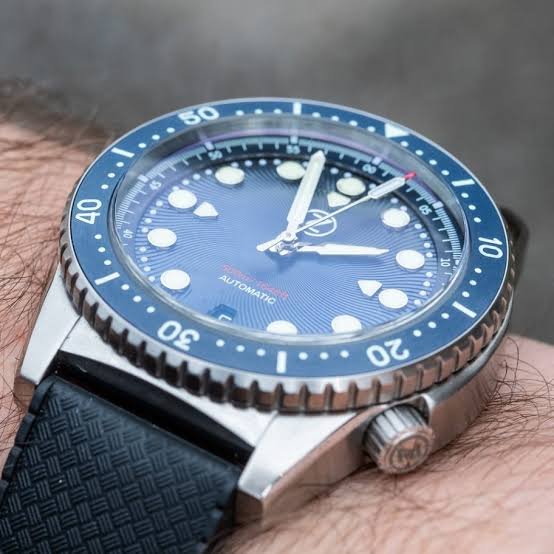
This idea of looking beyond the obvious leads us to a handful of smaller brands that deserve serious attention. Take Zelos, for instance. Founded in Singapore by Elshan Tang, Zelos built its reputation by doing something the big brands often shy away from—experimenting with materials and finishes that feel exotic without inflating prices into the stratosphere. A Zelos Hammerhead in bronze or a Mako with a meteorite dial is not only robust enough to be a daily wearer, but it also delivers a tactile, almost primal sense of individuality. Each patina that develops on bronze tells a story unique to the wearer, meaning that over the years of ownership, your watch becomes unmistakably yours. For the enthusiast weighing up a single watch, that kind of evolving character is priceless.
Or look at Halios, a Canadian independent whose production runs are notoriously snapped up within minutes of release. The reason? A design philosophy that blends restraint with modernity, producing pieces like the Seaforth and Universa that are not flashy but endlessly wearable. Halios watches don’t demand attention; they reward it. Their proportions are thoughtful, their dials understated yet compelling, and their versatility makes them as at home under a cuff as they are on a hike. If your idea of the perfect one-watch collection leans toward subtle competence—something that supports your life rather than shouts over it—Halios deserves a place on your shortlist.
Then there’s Ming, perhaps the poster child for modern independents who dare to think differently. Founded by Ming Thein and his collective of six enthusiasts, Ming burst onto the scene with bold design codes: flared lugs, layered dials, and an architectural approach to watchmaking that challenges the mainstream. A Ming 17.09, with its luminous dial elements that seem to float in space, feels more like wearable art than a utilitarian tool. Yet beneath that aesthetic flair lies reliable construction and thoughtful finishing. For someone who views watches as extensions of personality, Ming proves that your one watch doesn’t have to be traditional—it can be unapologetically avant-garde while still functioning flawlessly day after day.
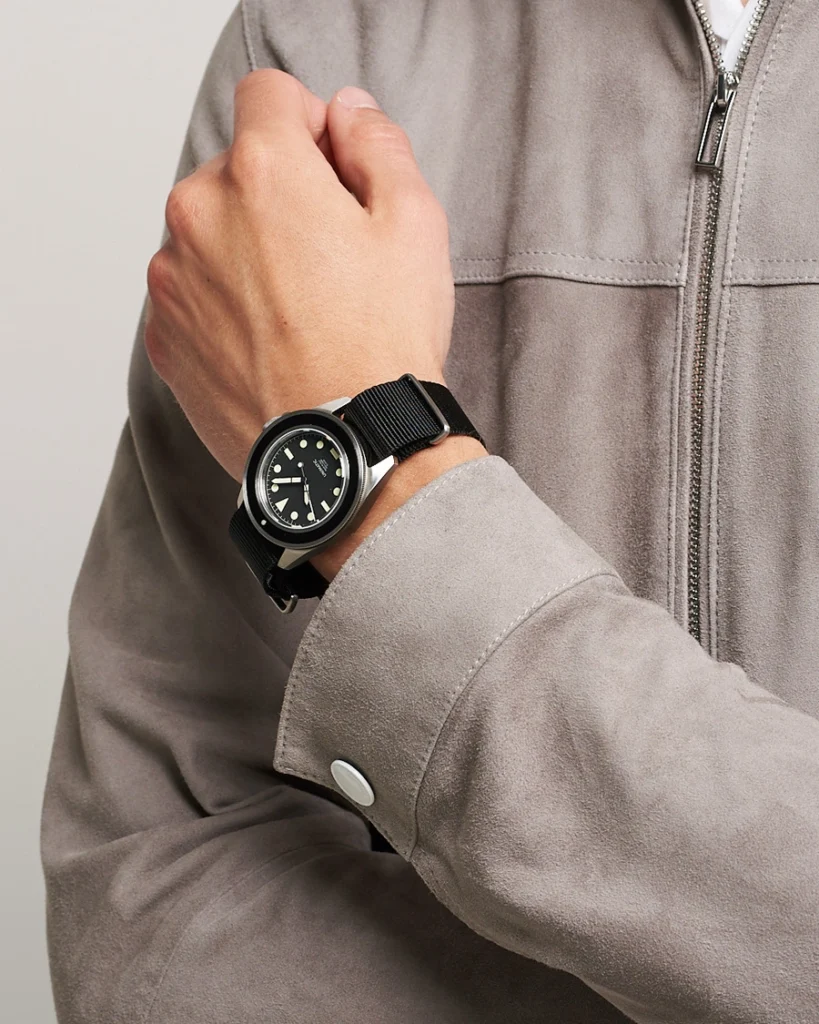
On the opposite end of the spectrum, Unimatic strips everything down to the bare essentials. Based in Milan, Unimatic produces tool watches that embody a brutalist kind of minimalism. Their Modello Uno, for instance, is a diver that feels both modern and timeless, with stark dial layouts and cases built to take abuse. What makes Unimatic special is its adaptability; swap the NATO strap for leather and the same watch transitions from field gear to casual daily wear with ease. It’s a chameleon in the truest sense, proving that the one-watch dream doesn’t always require compromise—it just requires clever design.
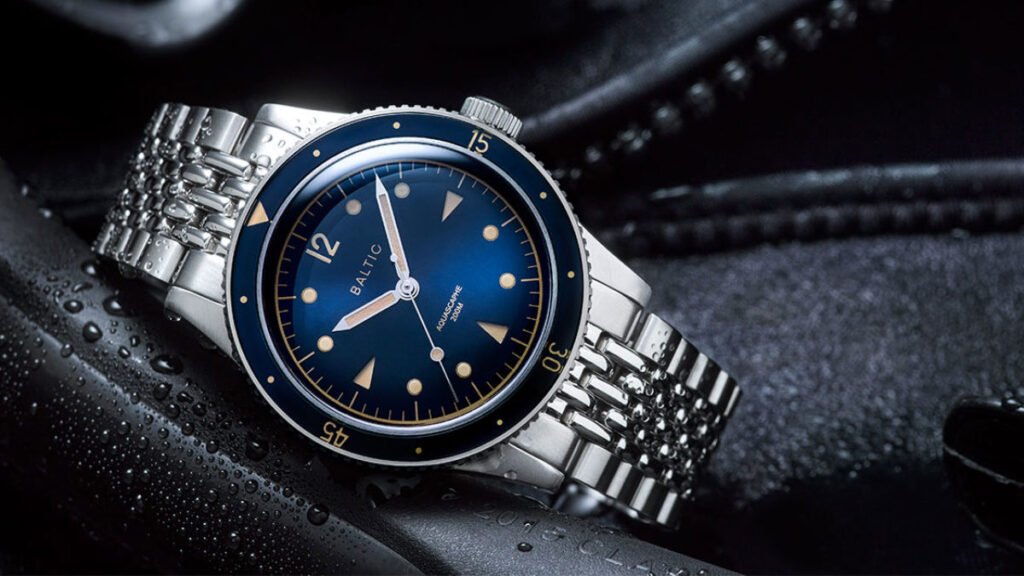
Finally, we come to Baltic, a brand born in France but steeped in mid-century inspiration. The Aquascaphe and HMS collections capture the spirit of the 1940s and 1950s without feeling like pastiche. Their proportions are classic, their domed crystals charmingly nostalgic, and their design language immediately recognisable. A Baltic Aquascaphe can scratch the vintage itch without demanding the upkeep or fragility of an actual vintage piece. For someone considering the emotional resonance of a one-watch collection, Baltic provides warmth and familiarity, the sort of watch that feels like an heirloom from the day you first put it on.
What unites these examples—Submersible Storm, Zelos, Halios, Ming, Unimatic, and Baltic—is the proof that the joy of ownership is not monopolised by the giants. Each of these watches can serve as the anchor of a collection, or indeed as the collection itself. They demonstrate that the notion of a one-watch life is not a thought experiment limited to the glossy pages of catalogues from Geneva and Glashütte. It is a practical, achievable reality if we’re willing to look beyond the logos we’ve been conditioned to revere.
Ultimately, whether one watch could ever be enough remains a deeply personal question. Some of us will always crave variety, the thrill of rotation, the satisfaction of discovery. But others may find freedom in narrowing the field to a single companion, a watch that doesn’t just tell the time but grows with you, adapts with you, and becomes inseparable from your daily existence. And when you realise that the choice doesn’t have to come from the “known” names, the exercise becomes even more liberating. The one watch you choose might be recognised instantly across a room—or it might be something only you and a handful of insiders appreciate. Either way, it will say something profound about who you are. And that, perhaps more than any brand name or model reference, is what makes the idea of a one-watch collection so endlessly fascinating.