 Just About Watches

Our aim isn’t to cover every detail — that would take a book for each story — but to create writing that feels alive, measured, and human. We invite our readers to join in, not as spectators, but as participants in a living narrative where words and images merge into a single experience. Our pages aren’t presentations; they’re conversations between time, craft, and culture. That’s why we write long — unapologetically long. It’s not a quirk; it’s a commitment. Depth gives context, emotion, and understanding room to grow. A short piece can tell you what a watch is; long-form writing shows you why it matters.
Every photograph we include carries meaning. It doesn’t compete with the text — it completes it. A close-up of a movement or a worn bezel isn’t just decoration; it’s part of the dialogue. The image becomes a tactile counterpoint to language, grounding abstraction in reality, like a sapphire caseback revealing the beauty beneath. We design our stories this way because we know that attention is fleeting in the digital age. Rather than fight that, we aim to capture your focus through rhythm and intention. Every phrase, every return to a theme, serves a purpose — not to repeat, but to resonate, much like a balance wheel repeating its motion to stay true.
We’re often told that people don’t have the patience for long-form writing anymore. We disagree. They have patience — what’s missing is trust. Too many articles skim the surface, recycle ideas, and underestimate their readers. We don’t. We assume you want to think, feel, and discover. That’s why our writing flows continuously, without jarring breaks or forced transitions. The continuity lets the rhythm of language take over — a smooth movement from logic to imagery, intellect to emotion.
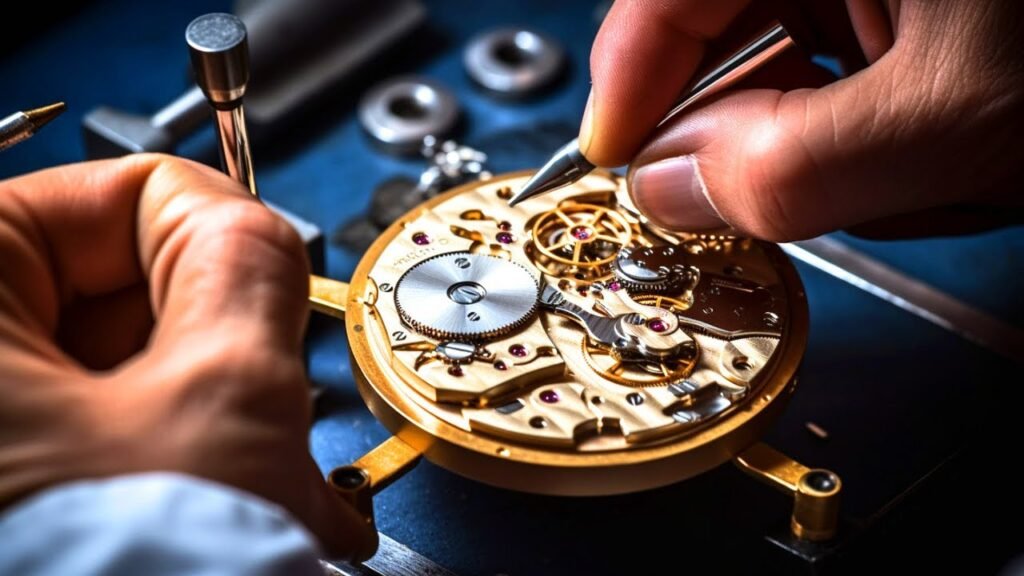
Every article we produce is designed like a piece of horology: composed, rhythmic, intentional. The structure mirrors itself, closing loops that began pages earlier, creating a sense of completion that feels satisfying even when the topic remains open-ended. It’s literary craftsmanship — the written equivalent of aligning the hands perfectly at midnight.
Our approach to repetition is deliberate. We use it as a watchmaker uses tolerance checks — for accuracy, consistency, and resonance. When a phrase appears again, it’s not indulgence but design. Repetition gives shape to rhythm and lets emotion echo naturally. We want our prose to feel tactile — like brushed steel or domed sapphire — even when we’re writing about abstract ideas. The sound and flow of language matter as much as meaning, which is why our pieces read smoothly aloud, their cadence echoing the measured pulse of time itself.
We don’t just write about watches; we write through them. The timepiece is our lens for exploring people, psychology, and design — stories of obsession, legacy, and craft. Horology, to us, is a language of human nature told in steel, brass, and light. Our long-form structure gives that language room to breathe, showing how technical details connect to emotion, how engineering becomes art.
This is why we design our visual and written content as one ecosystem. Words and images share a pulse, each supporting the other in rhythm. Even our citations and references stay tucked away, so the reading experience remains immersive. Academic rigour underpins the work — but never interrupts it. Like a beautifully finished movement hidden beneath a solid caseback, the complexity is there, but it feels effortless.
We know long-form writing asks more of both writer and reader. But it also gives more in return. Complexity shouldn’t be simplified — it should be understood. A short article can deliver information; a long one can change how you see. Reading deeply slows you down just enough to experience time itself. That’s the quiet poetry of what we do.
Our tone reflects that balance — conversational yet precise, passionate yet disciplined. We don’t speak to our readers; we speak with them. We write as fans, not as marketers, and we build every story as a bridge between curiosity and craft. Just About Watches isn’t a review site. It’s a space where horology meets humanity — where every sentence, every photograph, becomes part of a wider conversation about why time matters.
Each image and phrase is chosen to connect past and present. A macro shot of a mid-century bridge plate might sit beside a modern ceramic bezel, linking generations through continuity of craft. The rhythm of words mirrors the rhythm of time — each repetition both the same and new, each return deepening understanding.

Every article is an invitation — to slow down, to engage, to rediscover the joy of reading something that took time to make. We resist shortcuts because watches aren’t made that way either. They take years, patience, and intent. So should their stories. We write from honesty — from those quiet moments when the coffee’s gone cold, and we’re still discussing why a lume’s hue or a lug’s curve matters so deeply. That’s where real storytelling lives: in the details that hold memory, identity, and emotion.
When you read one of our long-form pieces, you’re not just reading an article — you’re sharing an experience crafted to engage the mind and the senses alike. We see long-form writing as an act of preservation in an age of speed: a way to protect patience, thought, and meaning. We tell stories that take time because time is what they’re about.
Our devotion to this approach is, in some ways, a quiet rebellion. The modern world rewards speed and simplicity; we choose substance and permanence. Each article is a small archive of insight, designed to endure — not to trend. Like a well-regulated movement, it doesn’t shout for attention; it keeps perfect, steady time.
By writing deeply, we restore something the industry risks losing: its storytelling soul. We write not just about watches, but about the minds and values behind them. We’re not simply reporting — we’re preserving a language, a way of seeing.

That’s why we’ll always take the long path. Long-form writing connects people who may never meet, bound by shared fascination and human imagination. It reminds us that horology isn’t just about the passage of seconds, but about the meaning within them. Every sentence, every image, every rhythmic return is a conversation between crafts — one of words, one of wheels — both striving for truth and beauty.
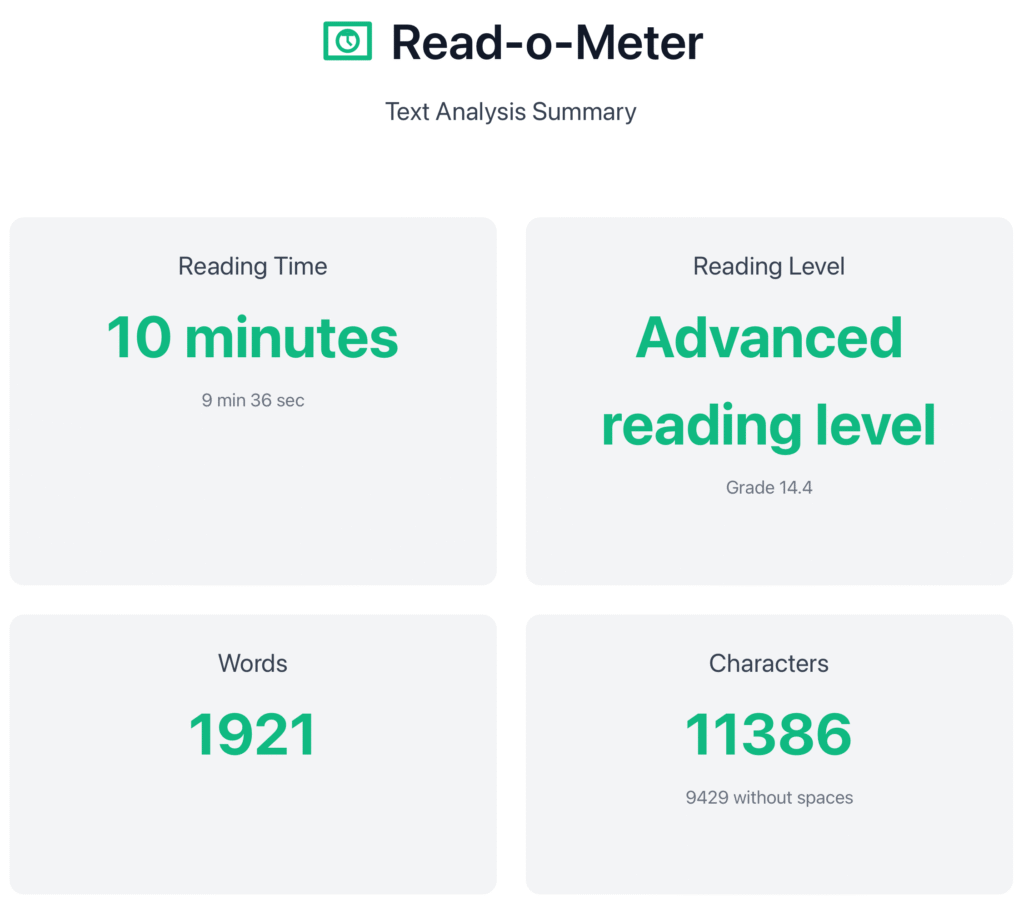
To help you make an informed decision on how much time you want to spend reading any particular article, we’ve added an approximation of the time it should take the average reader to get through the article. For example, this article will say at the top that it will take 5 minutes to read. (It took me 4 minutes 38 seconds.) That’s not cast in stone and never will be. We encourage readers to do so at their own pace. Throughout the major articles that might take 20 minutes or more to read, you’ll see we’ve broken them down into chapters so that you often get at worst a 10-minute read, usually seven. 7 minutes is the “accepted optimal reading experience,” if there is such a thing.
We’ll introduce bookmarking on the website as we evolve, so you’ll never get lost about where or what you’re reading. That’s the fun of the site, it’s been written for readers by professional writers and one thing we like to do, apart from getting our content grammatically correct, is to make it an enjoyable experience.
Truly, we really do hope you enjoy.
-Kev Green, Founder and Editor-in-Chief

