 Just About Watches


When forums like TimeZone first flickered onto computer screens, it was like stepping into a new dimension. Here was a place where you could put down your thoughts, questions, and discoveries, and find someone—often many someones—who actually cared. The difference was electrifying. No longer did you have to stumble through your own trial and error when it came to servicing schedules, aftermarket parts, or brand histories. Suddenly, there were threads. Hundreds of them. Thousands. Each one a conversation preserved in amber, waiting for the next collector to stumble across it. The archives became classrooms, encyclopedias, and confessionals rolled into one. You could watch an amateur restorer document the painstaking disassembly of a vintage chronograph, screw by screw, picture by picture. You could learn that the Lemania 2310 wasn’t just another movement but the very backbone of iconic chronographs from Omega to Patek. You could listen in on endless debates over the merits of in-house versus outsourced movements—discussions that occasionally flared into full-blown ideological wars, but from which you still learned, even if only by osmosis.
It wasn’t just technical knowledge that flourished in those spaces; it was also the human stories woven into the watches. Collectors didn’t just post pictures of their timepieces—they shared how they got them. The Speedmaster was bought on the birth of the first child. The Seiko diver carried through military service. The grandfather’s Rolex was unearthed in a drawer, sparking a deep dive into reference numbers and dial variations. Watches were never just objects; they were vessels of narrative, and forums allowed those narratives to resonate beyond one household, one circle of friends. Suddenly, you could connect with someone on the other side of the world who owned the same obscure reference as you, and that bond, however small, felt like validation. These early digital communities also had the feel of a secret society. You had to know where to look, and once inside, you had to learn the codes. Acronyms flew around like confetti—NOS, OEM, AD, WRUW—and if you didn’t know them, you learned quickly. It was daunting at first, but exhilarating, too. That shared language became a gateway, a way of signalling you belonged. And when you finally posted your own “WRUW” photo (that’s “what are you wearing” for the uninitiated), and someone commented on the lume, or the strap choice, or the condition of the dial—you felt like you had found your people.
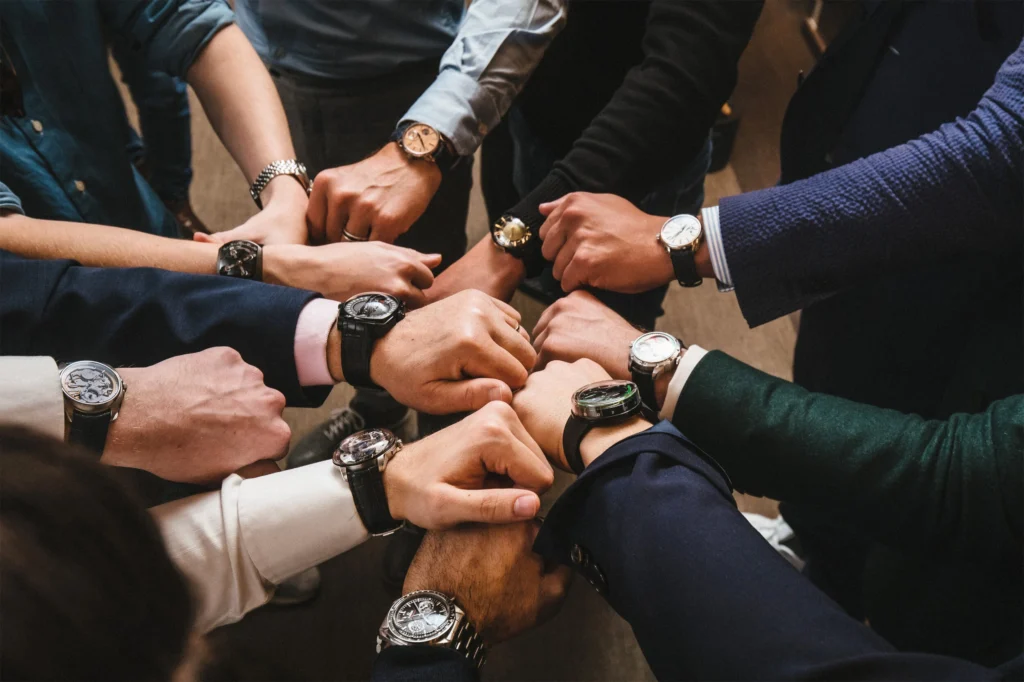
But what really gave these forums their staying power was their ability to create living archives of knowledge. In print, information froze at the moment it was published. A magazine review might note that a certain chronograph had poor lume or that a caseback was awkward to open, but that was it—the verdict was set in ink. On forums, the verdict was alive. A thread could begin with a single observation and then, over weeks, months, even years, be built upon by dozens of voices. Someone might add a photo of a rare dial variant; another might explain why a movement code had changed in a particular production year; yet another might debunk a rumour with factory documentation. A casual question on a Tuesday could become, without anyone realising it, the definitive record on a niche corner of horology. To this day, some of those threads are treated with more reverence than official brand histories, because they reflect lived experience, not curated marketing gloss.
Yet it wasn’t just about what you learned; it was about how you felt while learning. For the first time, watch enthusiasts who had been scattered and silent had a place to gather. There was camaraderie, generosity, and a sense of shared mission. Collectors who had once been isolated could now pool their knowledge, their mistakes, their triumphs. That sense of belonging is hard to overstate. Imagine finally finding a room full of people who care as much about the bevel on a lug or the font on a dial as you do. For many, it was intoxicating. It turned what had been a solitary passion into a shared identity.

Of course, the transition from isolation to community wasn’t seamless. The forums had their quirks, their hierarchies, and their pitfalls. But in those early years, the prevailing sense was one of discovery—of opening doors, not closing them. You didn’t just learn about watches; you learned how to be part of a community of watch lovers. You learned when to ask, when to listen, when to contribute, and when to sit back. The forums were classrooms, marketplaces, battlegrounds, and living rooms all at once, and in their best moments, they revealed the full richness of what it meant to be a collector.
In hindsight, what those early forums achieved was something remarkable: they turned a fragmented, private pursuit into a collective, global conversation. Before, you could be the only person in your town who cared about chronograph calibres or who knew the difference between tritium and Super-LumiNova. After forums, you could be part of a worldwide network of obsessives, each one feeding the other’s curiosity. That shift changed not only how knowledge was shared, but how collecting itself was experienced. Watches were no longer just about what sat on your wrist—they were about the stories you told, the debates you joined, and the connections you made.
The forums gave collectors a voice, and in doing so, they shaped an entire generation of watch enthusiasts. But as with any community, the very qualities that made them powerful—the anonymity, the passion, the open-ended conversation—also contained the seeds of their darker side. And as those seeds grew, so too did the challenges that would eventually force collectors to rethink how these spaces were run, and what kind of culture they wanted to sustain. You’ll see later in the article how easy it is for them to quickly get out of control. But before that, let’s touch on at least one positive thing this ‘new’ community culture provided.
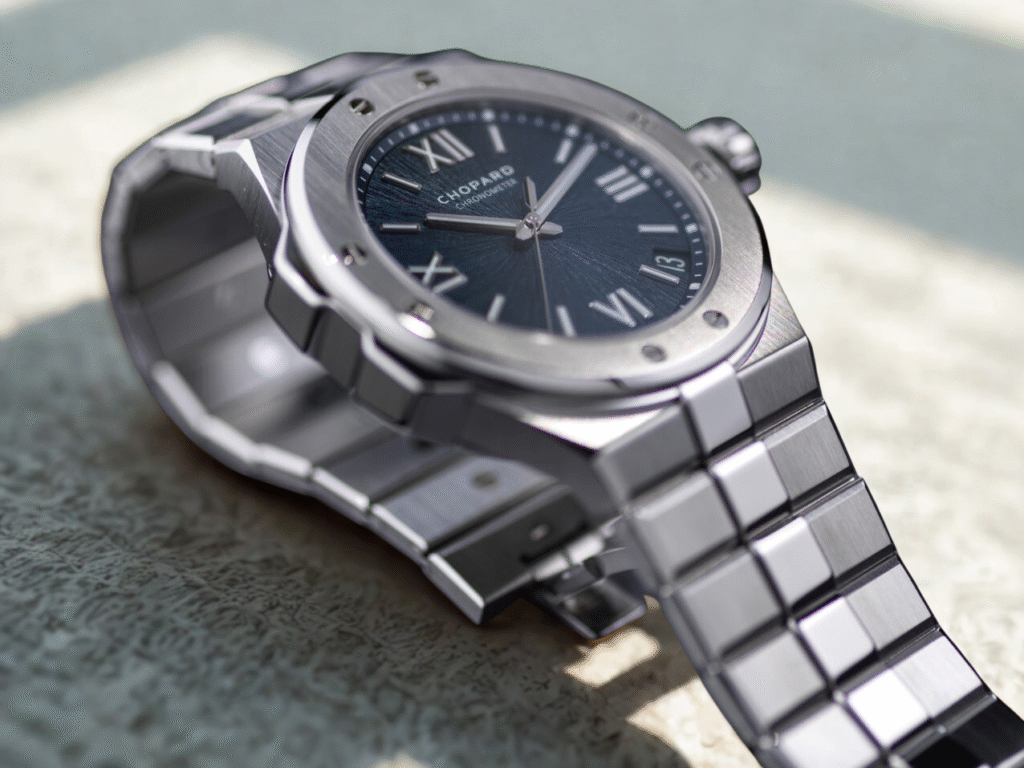
As the forums matured, another layer of collecting began to take hold: photography. After all, your work is now going in front of your peers, peers who know what they are looking at. At first, most images were utilitarian—slightly blurry shots under a desk lamp, hastily uploaded scans of catalogues, wrist shots taken on clunky early digital cameras. But over time, the quality improved, and with it came a new form of storytelling. It wasn’t enough to describe a dial variant anymore; you showed it. Not enough to explain the depth of a bezel; you captured it in macro. Photography became a second language within watch communities, and the creativity it unlocked changed how collectors related to their pieces. Watches were no longer just owned—they were staged, lit, celebrated, and archived visually.
Some of those early photographic threads achieved legendary status. A single collector might upload a series of macro images of a Patek Philippe movement, and those pictures would ripple across the forum, quoted, reposted, dissected. Others began curating “state of the collection” posts—line-ups of every watch they owned, photographed with pride, discussed with honesty. These threads became reference points not just for aesthetics but for aspiration. A newcomer scrolling through might discover a brand they’d never considered, or a model they didn’t even know existed. In that sense, photography democratized horology. You didn’t have to be near a boutique in Geneva to see a rare watch; you could log in from anywhere and have it in front of your eyes.
Meet-ups were the inevitable next step. What began as usernames and avatars started translating into real-world gatherings. “GTGs”—get-togethers—sprang up from Singapore to San Francisco, with collectors bringing their watches to cafes, hotel lobbies, even park benches. What was remarkable was the intimacy of it: strangers meeting not through work, family, or geography, but through an online bond forged over balance wheels and bezels. These gatherings became living proof that the internet wasn’t just creating echo chambers; it was building communities with tangible roots. Some of the most enduring friendships in modern collecting began this way—over a table of watches laid out on napkins, a pint glass reflecting lume, conversations stretching long into the evening.

The spillover into social media was both natural and inevitable. Instagram, when it appeared, was almost tailor-made for collectors. Its emphasis on visuals dovetailed with the photographic culture forums had already cultivated, but it stripped away the long paragraphs, the technical deep-dives, the archives of commentary. In their place came immediacy. A scroll, a like, a comment. The wrist shot, once a casual staple of forums, became a genre unto itself—#wristshot, #watchfam, #horology flooding feeds with imagery. Instagram elevated visibility but also compressed conversation. Depth was lost, replaced by speed. Where forums had built encyclopaedias, Instagram created galleries. It was seductive, addictive, but fundamentally different.
Facebook groups represented yet another turn. They fused the conversational flow of forums with the connectivity of social media, offering a space that felt more dynamic than static archives yet more discursive than Instagram feeds. Here, the culture was more immediate, more social, sometimes more chaotic. A post could ignite dozens of comments within minutes, ranging from heartfelt advice to light-hearted memes. The barrier to entry was lower, the conversation faster, and the community broader. Suddenly, collectors who might never have joined a forum were swapping notes on references and servicing in Facebook groups. This accessibility expanded the hobby’s reach, but it also introduced new tensions—different demographics, different norms, and a learning curve for governance that many groups struggled with.
Still, the continuity is clear. From the earliest days of TimeZone and WatchUSeek to today’s sprawling social media platforms, the heartbeat has remained the same: connection. Collectors seek not only the watch itself but the conversation around it—the validation, the education, the camaraderie, and sometimes even the argument. In that sense, the forums of the 1990s were not so different from the hashtags of the 2010s. Both were ways of making sense of a passion that can otherwise feel esoteric and isolating. Both were ways of saying: “I care about this—does anyone else?”

By the time social media fully took hold, the landscape of watch collecting had been irreversibly changed. What began as solitary enthusiasts leafing through magazines had become a global network of interconnected conversations. Knowledge was no longer hoarded; it was shared (albeit unevenly). Watches were no longer silent companions; they were conversation starters, status symbols, artistic subjects, and vehicles for philanthropy. And at the centre of it all was the same impulse that had driven those first forum posts: the desire to share, to connect, and to be understood. The story of online watch communities is, in many ways, the story of horology itself in the digital age. A transformation from isolated passion to collective culture. A shift from hidden knowledge to public archives. A movement from solitary appreciation to shared celebration. But as the next chapter will show, the same tools that built this culture also carried the seeds of something more troubling—the undercurrents of ego, hostility, and exploitation that continue to shape the experience of collectors today.
The trouble with any community—whether physical or digital—is that passion alone is never enough to keep it healthy. Where there are shared interests, there are also clashing egos, unspoken hierarchies, and power struggles that can turn enthusiasm sour. Watch forums were no different. For every generous soul patiently explaining how to regulate a mechanical movement, there was someone else ready to weaponise knowledge as a form of superiority. The anonymity of the internet made it all too easy to sharpen words into daggers, with no regard for the human being on the other end of the screen. What should have been a campfire—warm, collective, sustaining—too often turned into a bear pit where the loudest voices mauled whoever dared to step in.
One of the cruellest dynamics to emerge was the treatment of newcomers. In theory, fresh blood should be the lifeblood of any hobby. Without new collectors asking questions, bringing enthusiasm, and keeping the conversation alive, the culture stagnates. And yet, in too many forums, novices were met not with patience but with disdain. A simple question about whether an ETA 2824 was “worse” than a Sellita could trigger a barrage of scorn. “Use Google.” “If you don’t know, you don’t belong here.” This wasn’t mentorship—it was bullying disguised as authority. The irony, of course, is that many of those self-appointed gatekeepers had once been clueless themselves. Instead of remembering the generosity that helped them grow, they pulled the ladder up behind them, turning forums into gated gardens where only the already-initiated could flourish. In doing so, they strangled the very lifeline that could have sustained the community’s future.
What made these dynamics even more toxic was the veneer of virtue that often cloaked them. Cruelty wasn’t framed as cruelty—it was reframed as passion, as integrity, as “protecting the hobby.” A seasoned collector might tear apart someone’s beloved Seiko mod not because they genuinely cared about aftermarket bezels but because they saw an opportunity to posture. They would insist they were only “upholding standards,” but in reality, they were indulging in a performance of authority. When integrity becomes a cudgel rather than a compass, it ceases to be a virtue at all. And yet, in too many corners of forum culture, this is precisely what happened. The loudest, sharpest voices disguised their hostility as guardianship when in fact they were simply indulging in the theatre of superiority.

It didn’t help that many forums were plagued by absentee or complicit admins. Governance was either lax to the point of irrelevance or worse, entangled in the very behaviours it should have curtailed. Some administrators were hobbyists in name only, happy to let flame wars burn because it meant higher engagement statistics. Others played favourites, stepping in only when their inner circle was threatened but otherwise letting hostility run unchecked. In these climates, toxic behaviour flourished. Members quickly learned that they could get away with mockery, harassment, and even libellous accusations without fear of consequence. For those on the receiving end, the message was clear: you weren’t just unwelcome—you were unprotected. A hobby that should have been a refuge became, for many, a place of dread. The damage done in these spaces wasn’t always abstract. Reputations were shredded with alarming ease.

Sellers found themselves branded as scammers, sometimes quite rightly so, due to misunderstandings or vendettas, their names dragged through threads that lingered forever in search results. A misplaced word, an unpopular opinion, or even just enthusiasm for the “wrong” brand could trigger a pile-on that left people humiliated. In the real world, such accusations could have led to lawsuits. Online, they were tossed around like casual banter, with no thought for the long-term consequences. Careers were damaged. Friendships ended. For every collector who thrived in forums, there was another who quietly slipped away, driven out by the hostility.
The scale of toxicity only grew as forums ballooned in size. With larger audiences came louder megaphones for the worst actors. Trolls discovered that they could pass themselves off as enthusiasts while sowing discord. Some went further, masquerading as collectors with fabricated photos—Google images passed off as personal shots, catalogue renders masquerading as ownership. They stoked debates not out of passion but out of mischief, delighting in the chaos they caused. To the casual eye, this might have looked like harmless provocation, but the cumulative effect was corrosive. Trust eroded. When you couldn’t tell who was genuine and who was playing a role, every interaction was tainted by suspicion.

Alongside the trolls came something arguably worse: coordinated hate groups, often with military precision. These were not mere provocateurs but organised individuals or factions determined to discredit certain brands, sellers, or even fellow collectors. Usually, they justified their campaigns under the guise of “consumer protection.” They claimed to be exposing overpriced microbrands, questionable practices, or low-quality watches. But their tactics—harassment, smear campaigns, doctored photos, deliberate misinformation—spoke to something darker. It was less about protecting the hobby and more about asserting dominance, controlling narratives, and in some cases, crushing competition. For small independent brands, the consequences could be devastating. A single coordinated smear campaign could sink a launch before it even began. For individual collectors, it could mean social exile. These groups wielded forums like weapons, turning shared spaces into battlegrounds.
And then there was the ever-present spectre of elitism. Watch snobbery has always lurked in the background of horology. The Rolex owner sneering at the Seiko fan; the haute horologerie devotee dismissing quartz as “cheap and soulless.” But forums amplified this tendency to theatrical proportions. Status flexing became endemic. Collections weren’t just shared—they were performed. A photograph of a Patek Philippe wasn’t simply posted; it was framed as a declaration of superiority. Those with more modest collections found themselves marginalised, treated as spectators in a sport they couldn’t afford to play. The absurdity of it all was glaring. A Casio F91W is as legitimate a part of horological history as a Lange Datograph, just on a different scale. To sneer at one while sanctifying the other was to miss the point entirely. Yet in too many corners of forum culture, this absurd hierarchy was enforced with zeal.

What compounded all of these problems was the creeping monetisation of forums by admins who realised that large, engaged audiences could be lucrative. Advertising partnerships, sponsored posts, and affiliate links—all of these transformed what had once been communities into marketplaces. Again, none of this was inherently wrong. Forums cost money to run, and financial support is a practical necessity. But when profit began to outweigh impartiality, impartiality died. Discussions critical of sponsors were quietly deleted. Brands paying for visibility suddenly found themselves untouchable. Grey market dealers were given privileged access to members, their motives disguised as generosity. The members themselves became commodities, their trust traded for revenue. What had once been campfires of shared enthusiasm now looked more like stages for thinly veiled sales pitches.
The result of all this was a paradox. Forums remained invaluable repositories of knowledge, yet they were also places of hostility, ego, and exploitation. They could connect you with lifelong friends or drive you out of the hobby entirely. They could preserve the collective memory of horology or distort it through bias and misinformation. The difference lay not in the passion of the members—that was constant—but in the culture fostered by leadership. And in too many cases, that leadership failed. Communities were not nurtured but neglected, not guided but exploited. The inevitable outcome was fragmentation: collectors seeking out safer, healthier spaces elsewhere.
This fragmentation set the stage for a new kind of community—one that recognised the pitfalls of the past and sought to build something better. Out of the ashes of toxic forums rose groups that placed fairness, inclusivity, and purpose at their core. Groups that understood governance was not an afterthought but the very foundation on which trust is built. And among these, one stood out for not only fostering discussion but for using that discussion to drive real-world impact. That group was Just About Watches.
If the history of watch forums teaches us anything, it’s that passion alone cannot sustain a community. What sustains it is culture. Culture is the invisible architecture that determines whether shared spaces become gardens or wastelands, whether they nurture people or drive them out. After years of watching forums collapse under the weight of their own egos, profiteering, and unchecked toxicity, there came a moment when some collectors realised that if they wanted something better, they had to build it themselves. This was not simply about avoiding the pitfalls of the past; it was about proving that a community could be different. It could be fair. It could be balanced. It could be purposeful. Out of that realisation, Just About Watches was born.
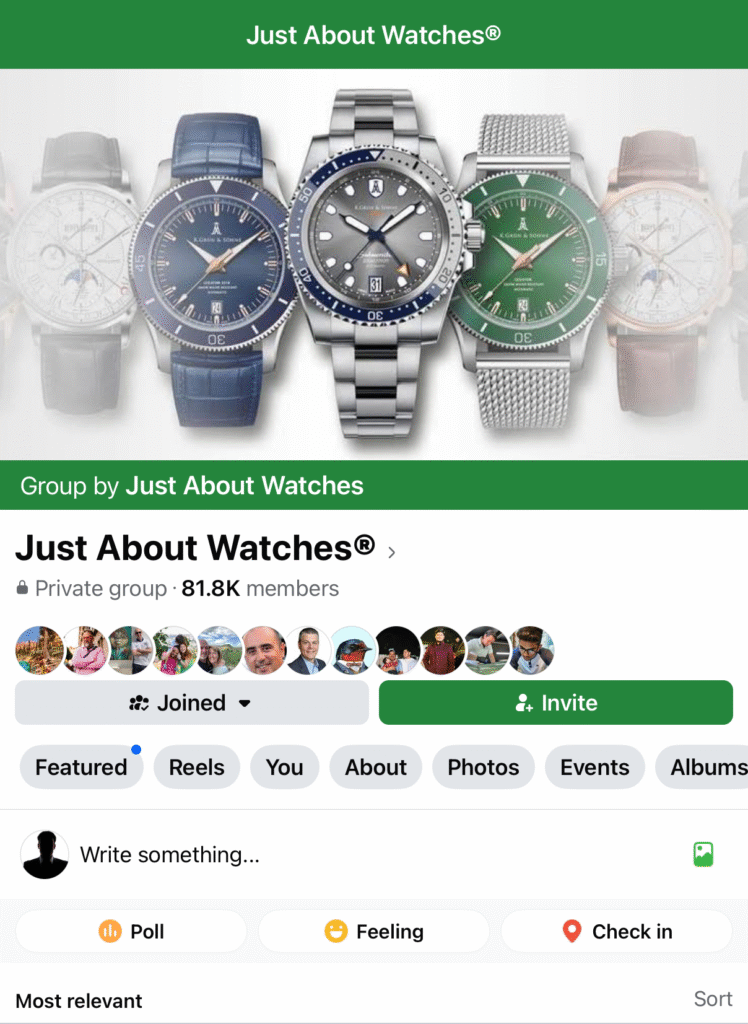
From the beginning, Just About Watches set itself apart by refusing to be just another corner of the internet where wrist shots and spec lists were recycled endlessly. It wasn’t created to mimic the old forums but to offer a genuine alternative. The founder understood the trap of building a “forum 2.0”—if the governance was the same, the outcome would be the same. What was needed wasn’t another message board but a true community: one grounded in clear values, transparent leadership, and a sense of responsibility that extended beyond watches themselves. This was the leap that most forums had never dared to take. Where others thought only about watches, Just About Watches thought about people.
The difference was evident from day one. Instead of letting conversations devolve into ego contests, the culture actively encouraged generosity. Knowledge wasn’t hoarded or weaponised; it was shared. A newcomer asking whether their quartz Citizen was worth collecting wasn’t dismissed with sarcasm but met with thoughtful, encouraging replies. A veteran collector with a safe full of independents could post alongside someone showing off their very first Casio, and both would be treated with equal respect. This wasn’t accidental—it was structural. Leadership made it clear that all voices mattered and that moderation would not turn a blind eye to hostility. By building governance into the DNA of the group, Just About Watches did what so many forums failed to do: it created an environment where people felt safe to be enthusiastic.
But what truly set Just About Watches apart was that it refused to exist in isolation. Forums and groups too often became insular worlds where the conversation circled endlessly around itself. Just About Watches looked outward. It recognised that watches are not an end in themselves but a vehicle: for storytelling, for connection, for impact. That’s why the group embedded a fundraising mission into its very foundation. By aligning itself with brain tumour and cancer research, Just About Watches ensured that every conversation, every post, every connection carried a weight beyond horology. Collectors weren’t just engaging in a hobby—they were contributing to a cause. This simple but radical shift gave the community a moral compass, something forums had always lacked. Instead of being defined by what it was against—against snobbery, against profiteering—Just About Watches was defined by what it was for.
This balance between passion and purpose created a cultural gravity that drew people in. Members weren’t just numbers in an engagement statistic; they were participants in a collective endeavour. The shared knowledge and camaraderie were still there—threads about Grand Seiko finishing techniques, debates over chronograph calibres, enthusiastic photos of microbrand releases—but they were grounded in a larger framework. Every like, every comment, every discussion was implicitly tied to the knowledge that part of this energy was fuelling something meaningful in the real world. That sense of alignment mattered. It turned what could have been just another watch group into a community with identity, with integrity, and with soul.

Importantly, the governance of Just About Watches avoided the traps that had sunk so many forums before it. Admins weren’t absentee landlords but active stewards. Decisions were transparent. Rules were enforced fairly, without bias towards inner circles or personal favourites. Sponsorships were not allowed to warp discourse or shield brands from critique. Where profiteering had once hollowed out communities, here trust was preserved through clarity. This wasn’t about monetising members—it was about protecting them. The result was a space where people felt not only welcome but protected, a rare commodity in the modern internet.
The inclusivity of Just About Watches was also central to its appeal. Unlike elitist spaces that reinforced hierarchies of price and prestige, the group flattened the playing field. A Casio G-Shock wasn’t sneered at; it was celebrated for what it was. A Rolex wasn’t idolised to the point of absurdity; it was contextualised. Independent watchmakers weren’t dismissed as niche curiosities; they were given the spotlight they deserved. This pluralism wasn’t just about politeness—it was about recognising that horology is a tapestry. Every watch, from the cheapest quartz to the most complex tourbillon, contributes a thread to that fabric. By honouring all of them, the group made it possible for everyone to see themselves reflected in the conversation.
This ethos extended to how the group handled conflict. Instead of letting disagreements spiral into character assassinations, there was an expectation of civility. Debates over movements or brands could be passionate without being personal. If lines were crossed, moderation stepped in—not to silence voices, but to keep the environment constructive. This simple but firm boundary transformed what would otherwise be battlegrounds into genuine discussions. Members learned that they could express strong opinions without fear of being mobbed. The paradox of freedom is that it requires structure. By providing that structure, Just About Watches offered more freedom, not less.

The ripple effects of this culture extended far beyond the group itself. Members who felt supported became more generous in turn. They shared their knowledge freely, mentored newcomers, and even donated watches for fundraising auctions. The community became not just a hub for enthusiasts but a catalyst for good. Stories of people entering the group with a single affordable watch and, through the support of others, building a meaningful collection, became common. Equally common were stories of people finding comfort and friendship during difficult times, when the group became more than a hobby—it became a refuge. In this way, Just About Watches succeeded where so many others failed: it turned passion into solidarity.
Of course, no community is perfect. There were still moments of friction, still disagreements, still the occasional flare of ego. But the difference was in how those moments were handled. Instead of being ignored or exploited, they were addressed. Instead of festering into toxicity, they became opportunities to reaffirm values. Perfection was never the point; integrity was. And that integrity—visible in the smallest interactions as well as the largest initiatives—became the cornerstone of the group’s identity.
Looking back, the contrast is striking. Where forums often collapsed under toxicity, Just About Watches thrived on inclusivity. Where forums commodified their members, Just About Watches protected them. Where forums existed in a vacuum, Just About Watches connected horology to a larger mission. The lesson here is clear: leadership matters. Governance matters. Purpose matters. Without them, passion curdles into hostility. With them, it blossoms into something greater than the sum of its parts.
And so Just About Watches stands as both counterpoint and proof. Counterpoint to the failed experiments of the past, proof that a community can be fair, balanced, and purposeful. Proof that enthusiasm doesn’t have to be tainted by ego, that passion doesn’t have to collapse into toxicity. Proof, too, that a hobby as seemingly insular as watches can, when guided by the right values, contribute to something as expansive and vital as saving lives. This is not the kind of legacy most forums leave behind. But it is the legacy Just About Watches is building, day by day, post by post, conversation by conversation.

The story of online watch communities, then, is not a story of decline but of evolution. It’s the story of how the failures of one era set the stage for the innovations of another. It’s a reminder that communities are not static—they are living organisms shaped by the values of those who lead them. And it is an invitation: to participate, to contribute, to recognise that when we share our passions responsibly, we can create spaces that are not only welcoming but transformative. Just About Watches is proof of what happens when that invitation is accepted.
Of course, it could have been very easy to end this article on a negative note by focusing on the still prevalent toxicity that sadly still exists in many of the groups, but that’s defeating the purpose of writing this brief insight into social media toxicity. Hate and disquiet can never win, and as long as Just About Watches, and no doubt other watch groups, run in an orderly fashion, there remains a hope that the passion millions of us enjoy can be done in relative sanctuary.