 Just About Watches

A Note Before We Begin…
And if you’re anything like me, you probably don’t want to hurry through a story of a brand so rich and storied as Breitling. There’s just too much ground to cover — too many moments, innovations and personalities to give the impression of a mere stroll. That’s why I’ve split this article into several easy-to-read chapters: each exploring a different era or theme in Breitling’s evolution. Whether you’re settling in on this whole of the journey, or dipping some toes into one chapter at a time, I hope you’ll discover something here that deepens your respect for the watches — and the people — behind the name.
Origins in the Jura
Breitling is one of those famous names in watchmaking that paints an easy and vivid picture for many of us. When you look at an instrument panel, look into the cockpit, or at the wrist of the pilot, you’ll understand the draw of the brand. There is so much more than just precision engineering or Swiss swagger — it’s the story of innovation, commercial showmanship and all these rare cultural moments which you carry with you for years to come. And that is why Breitling looks even today so beautiful and adaptable. This is the point of departure for Breitling to live on.
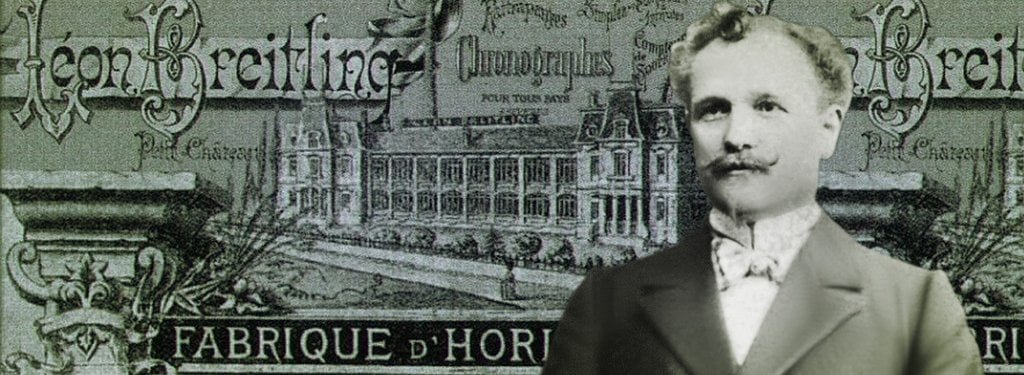
Stretching backward a step can be reached in 1884, when a young Léon Breitling– hardly out of his teens–opened shop in Saint-Imier, a modest Swiss town that, like most of its neighbours, was already bristling with watchmakers. His ambition was to create chronographs that would genuinely be beneficial for science, industry and sport. Léon didn’t follow the crowd. His fixation with timing was an obsession, a long-time way before most realized how good it was, and that single-mindedness became the core of what Breitling advocates today. From the get-go, these weren’t watch-pieces but tools, and they served to reinforce the idea of Breitling being a watch maker.

Saint-Imier itself was an influential factor in shaping Breitling in its ethos itself. Nestled in the Bernese Jura, Saint-Imier had a watchmaking community to draw on, a place where competition and mutual learning was rife – even among watchmakers. If you visit, you’ll feel the legacy up there: rows of tidy houses, the low clatter of tools behind workshop doors, the feeling of time being measured just a little more closely than it is elsewhere.
Building a Reputation
Breitling’s technology-oriented ambition was evident from the start. That pioneering patent in 1889 — for a chronograph to measure intervals without interrupting a continuous beat of time in some time period—is known as the first. It set a standard for all that followed. Léon’s watches were soon adopted by railway operators, scientists and industrialists—people for whom time wasn’t a fascination but was primarily a safety concern and a matter of how fast they could make work done. All the pieces were a pledge: “You can trust this even when the stakes are high.”
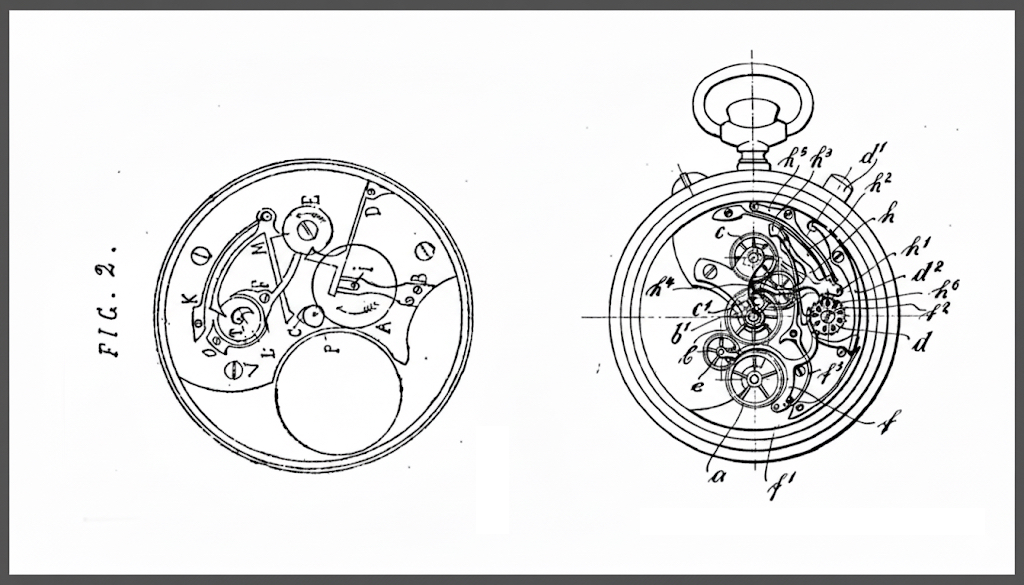
Breitling’s accuracy-dependability focus brought an edge. To some, ornate complication was a source of prestige; to Léon, the goal was perfection of the movement inside the case. He favored the most skilled of artisans, and was praised for having extremely high standards. When a timepiece fell short of his expectations, it didn’t leave the workshop.
It didn’t take long for word to get around. Breitling’s chronographs started to find their way into laboratories and factories across Switzerland and elsewhere. The brand earned a reputation for reliability and that association would soon catch on with a new rapidly advancing, rapidly moving society: aviation.
A New Frontier: The Skies
The first decades of the 20th century were an era of seismic change in technology and society. As you follow Breitling’s trajectory through this period, you’ll see how the brand reflected those dramatic changes. But the advent of powered flight transformed the sky into a new frontier, and pilots had an extremely real challenge to navigate with rudimentary, frequently unreliable, instruments. The cockpit, a hostile and erratic place — cold and noisy and interruptive. Every second mattered.
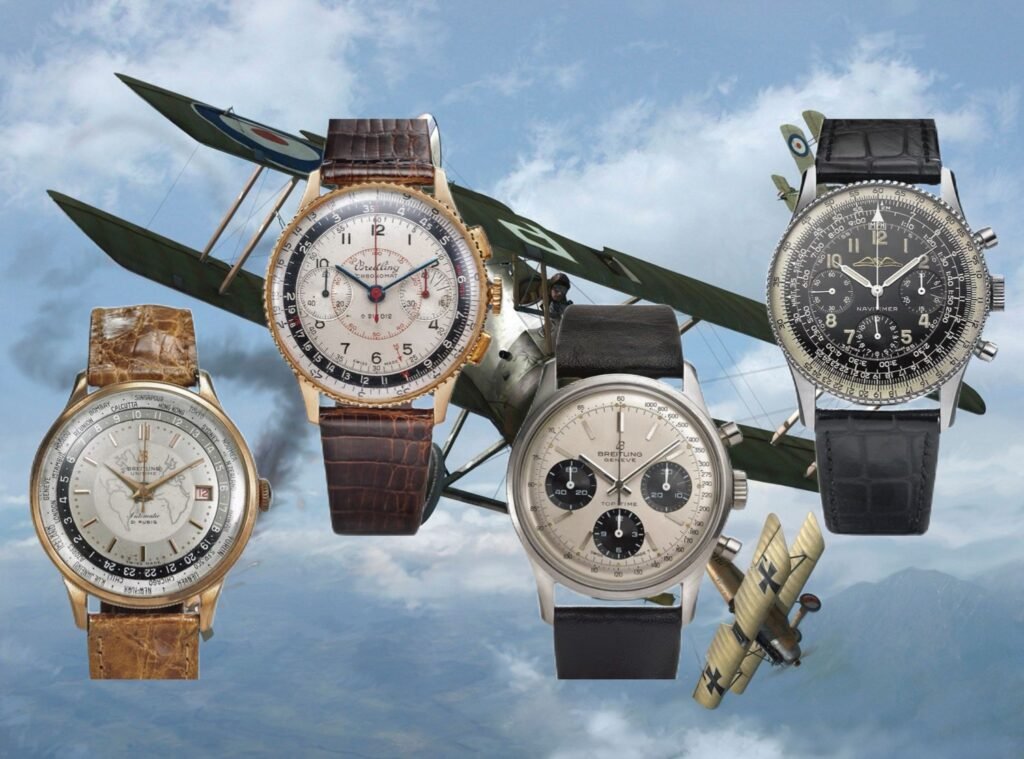
Breitling viewed, not only an opportunity, but a responsibility: to design watches that professionals could rely on for their lives – tools that delivered that level of precision only if absolutely necessary. The company started to work more closely with pilots, listen to them, enhance the chronographs that would survive the harshness of life on the wing.
In 1915 Breitling introduced one of the first wrist-worn chronographs with a separate pusher atop the crown. This clever detail allowed elapsed time to be recorded independently of regular timekeeping — a small innovation at that time, but hugely impactful. Imagine those early pilots: no more bulky pocket watches or makeshift timing jags. Now with a trusty instrument strapped to their wrist, they could keep an eye on intervals, read their maps and keep their hands free for flying. Breitling’s long affiliation with aviation began here. Each new challenge in the cockpit could be the beginning of yet another leap forward in watch-making.
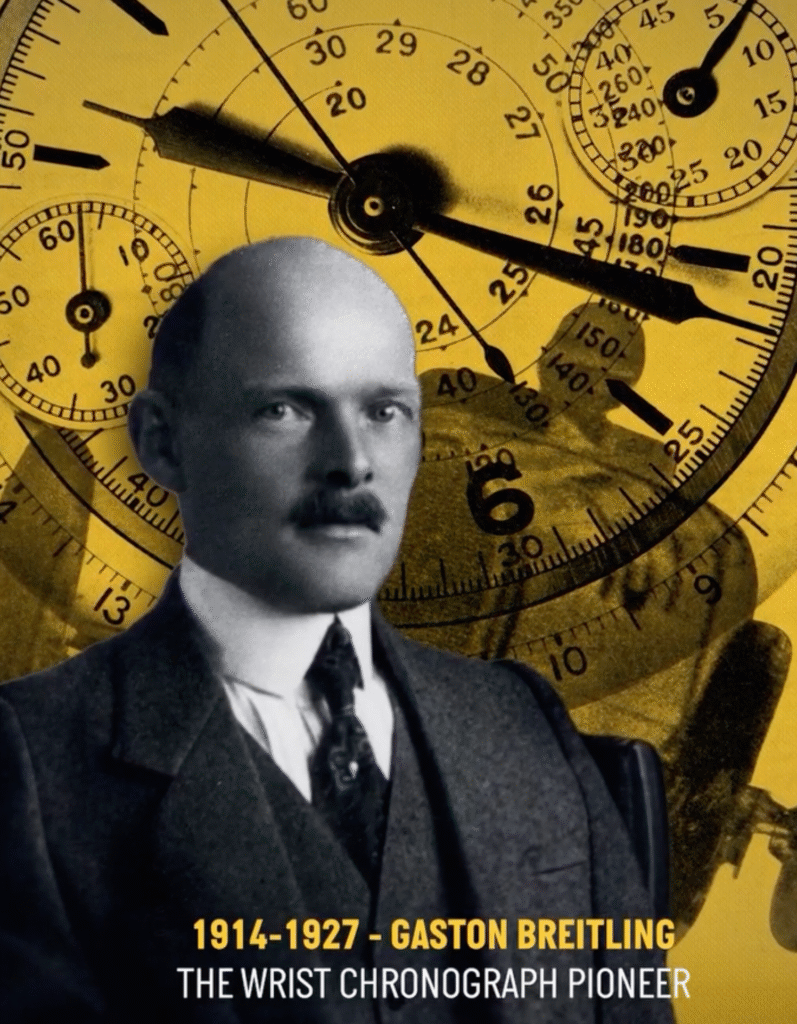
Between the wars there was a period of daring experimentation at Breitling. Léon’s son, Gaston, went a step further in 1923, designing a wrist chronograph with a single push-piece, meaning you could start, stop, reset everything with one button. Try to visualize the sophisticated machinations behind what appeared to be a mere pusher: an entanglement of levers and springs designed for perfect performance. That innovation didn’t only speed up life for professionals; it set the stage for breakthroughs to come, from split-second timing to multi-scale measuring. What I notice in the early years of Breitling is this continuity of vision — a family-based pursuit of practical, technical excellence, one that puts real-world functionality over flashy detail. That was also the reason why professionals started to be drawn to Breitling, and the reason the tradition of the brand as content as opposed to aesthetics planted a strong root.
Setting the Standard
By the late 1930s and 1940s, Breitling’s scope extended far beyond individual watches — now, the brand was aiding in shaping the very apparatuses that formed the bedrock of aviation. This was the time during which Breitling developed into a staple of chronographs and instruments for military pilots, setting benchmarks that reverberate even now. Suddenly the chronograph wasn’t simply a convenience of our hearts on our wrists; it was a necessity for navigation, calculations about speed and the coordination of entire missions.
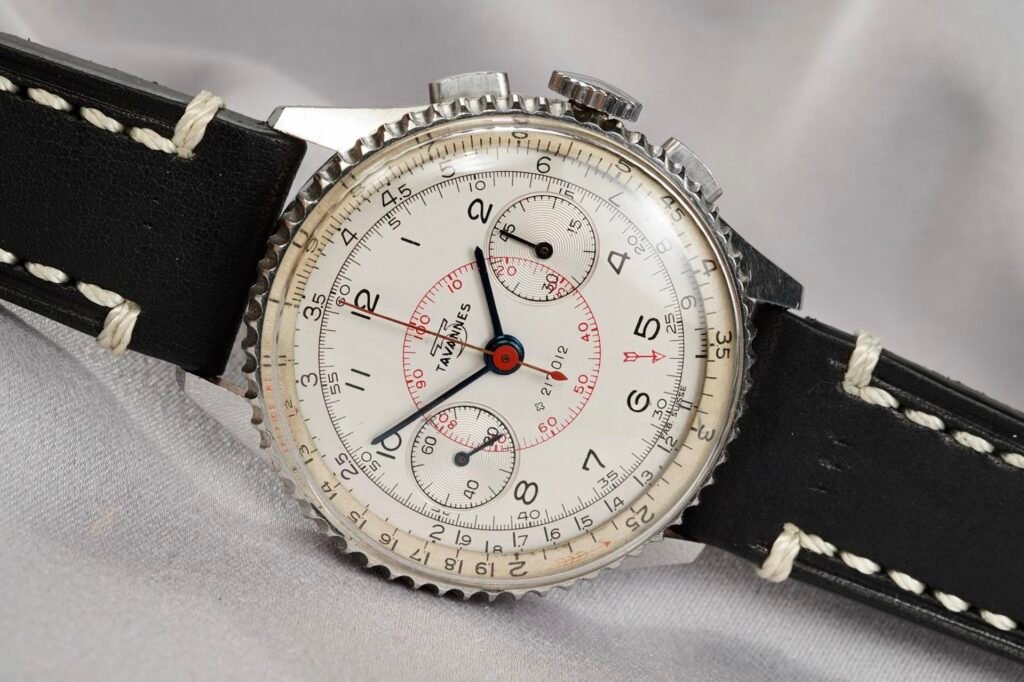
Breitling’s decision to work directly with both pilots and engineers resulted in inventions like the 1942 Chronomat, a watch that immediately became an essential resource for flying. Its logarithmic scale for in-flight calculations—a feat that would later make the Navitimer legendary—provided a real advantage. These weren’t just technical wonders — they were made to get by in the real world of flight, readable and reliable through vibration, stress and whatever pilots could dish them. But it wasn’t unusual for pilots to tell stories of this new kind: their Breitling going through rough landings, getting stranded in the dry mist outside and living amidst the stormy streets where men and women die day after day, or the wild tumult of military life.
This combined emphasis on both mechanical excellence and real-world usability is something Breitling’s watch makes its mark unlike any other made for looking rather than working. Even now, when I wear a piece of real heritage, a vintage Breitling from the old days, that kind of moment is brought back into my head; it brings home what all those young professionals who lived and worked with them looked forward to; and it brings on the confidence that is tied firmly into a genuine piece of history.
Looking Ahead
As the chapter wraps up Breitling’s formative years, the brand is poised for another key move — into the jet age, into the arms of commercial pilots, and into the imaginations of enthusiasts far away from the professional aviation world. That foundation built by those early decades — of precision and reliability, of an unremitting approach to solving real problems — was going to work out best for Breitling now that it’s much more than just a toolmaker. And in the next segment of our chronicle, we’ll look at how the brand made its way to the post-war boom, commercial flight and the development of the most recognisable watches as a part of horological history.